

TL;DR:
- Greek car dealers number over 650, with most being independent operators offering flexible negotiation and varied inventory. Buyers should verify dealer credibility through independent inspections and detailed service records before purchasing, especially for used cars. Financing options include bank loans and private grammatia agreements, which require careful legal review to avoid financial risks.
Greece car dealers form a network of over 650 active dealerships, making the Greek auto market one of the more dynamic in southeastern Europe. Whether you want to buy a used sedan in Athens or lease a pickup truck in Thessaloniki, knowing how this market works puts you in a stronger position before you ever walk through a showroom door. The market skews heavily toward independent operators, which shapes everything from pricing to financing options. This guide covers dealer types, regional distribution, inspection rights, and financing practices so you can buy with confidence.
What types of Greece car dealers exist and what do they offer?
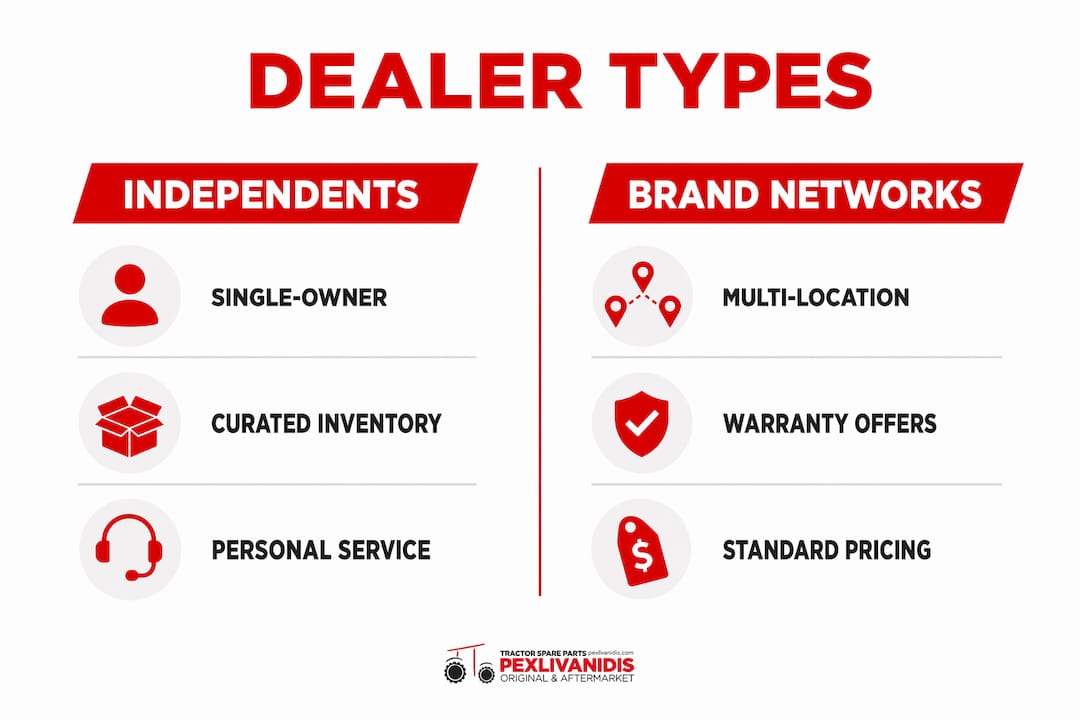
Greek car dealerships fall into two broad categories: single-owner independents and brand-affiliated networks. As of April 2026, 82.65% of dealers are single-owner, while 17.35% belong to larger corporate groups. That ratio matters because it shapes the buyer experience in concrete ways.
Single-owner dealerships tend to offer more flexible negotiation on price and financing. They also carry more varied inventory, often mixing makes and model years on the same lot. Brand-affiliated dealerships, by contrast, follow manufacturer standards for certification, warranty coverage, and service documentation. Both types serve legitimate needs, but the right choice depends on what you prioritize.
Most reputable dealerships, regardless of size, offer a core set of services:
- Mechanical inspection: A pre-sale check covering engine, brakes, suspension, and electrical systems
- Quality warranty: A limited guarantee covering defects discovered after purchase, typically 3–12 months
- Trade-in valuation: An offer on your current vehicle applied against the purchase price
- Direct financing: Dealer-arranged payment plans, sometimes without bank involvement (covered in detail below)
- After-sale support: Service scheduling, parts sourcing, and follow-up maintenance
Established dealerships often include mechanical inspection and quality warranties, with some adding trade-in and direct financing options. The presence of these services signals a dealer invested in repeat business, not just one-time transactions.
Pro Tip: Ask any dealer for a written list of every service included in the sale price before signing anything. Verbal promises do not hold up in disputes.
Longstanding dealers provide premium, curated vehicle choices and emphasize ongoing customer support beyond the purchase date. That post-sale relationship is often where the real value of choosing a reputable dealership shows up.
Where are car dealerships in Greece concentrated?
Greece’s dealership network clusters heavily in three regions, and that concentration directly affects your buying options. Attica hosts 399 dealers (60.73% of the national total), Central Macedonia holds 106 (16.13%), and Crete accounts for 64 (9.74%). The remaining dealers are spread across the rest of the country.
| Region | Number of Dealers | Share of National Total |
|---|---|---|
| Attica | 399 | 60.73% |
| Central Macedonia | 106 | 16.13% |
| Crete | 64 | 9.74% |
| Rest of Greece | 88 | 13.40% |
Attica’s dominance reflects Athens’ role as the country’s economic and population center. More dealers in one area means more competition, which generally keeps prices sharper and inventory fresher. Buyers in Athens have the widest selection of both new and used vehicles, plus the most options for independent inspection services nearby.
Central Macedonia, anchored by Thessaloniki, offers a strong secondary market. Buyers there benefit from a solid mix of independent and brand-affiliated dealers without the congestion of the capital. Crete’s dealer base serves a large island population with distinct logistics, so inventory turnover can be slower and pricing less competitive than on the mainland.
If you live outside these three regions, the practical advice is to plan at least one trip to a major hub before buying. The price difference on a comparable vehicle can easily offset travel costs. Greece auto sales data shows the market grew by 4.57% between 2023 and 2026, so inventory across all regions has expanded.
Pro Tip: Buyers in rural areas can use Greece car dealerships online to browse inventory and request vehicle history reports before making the trip to inspect in person.
What should buyers know about inspecting used cars and verifying dealer credibility?
Buying a used car in Greece without an independent inspection is the single biggest mistake buyers make. Transparency is emphasized by reputable dealers through mechanical checks and allowing independent vehicle tests, but the buyer must ask for these explicitly. Do not assume a dealer’s in-house check is sufficient.
A thorough inspection process follows these steps:
- Request the full service history. A documented record of oil changes, brake replacements, and major repairs tells you how the car was maintained. Gaps in the record are a red flag.
- Ask for the dealer’s mechanical inspection report. This should cover the engine, transmission, suspension, brakes, tires, and all electrical systems. Get it in writing.
- Arrange an independent inspection. Buyers legally may have vehicles inspected at third-party mechanics before purchase, independent of dealer assurances. Choose your own workshop, not one the dealer recommends.
- Check the dealer’s professional standing. The Association of Car Importers and Dealers of Greece (SEAA) maintains standards for member dealerships. Membership is not a guarantee of quality, but it signals accountability to an industry body.
- Verify the vehicle’s registration and ownership history. Confirm the VIN matches all documents and that there are no outstanding liens or accident reports attached to the vehicle.
Dealers advise buyers to insist on full mechanical reports and independent workshop evaluations, not just a visual walkthrough. A visual check misses internal wear, hidden rust, and electrical faults that only show up under load.
Pro Tip: If a dealer refuses to allow an independent inspection, treat that refusal as a definitive reason to walk away. No legitimate seller objects to a buyer doing due diligence.
Checking a dealer’s online reviews across multiple platforms also helps. Look for patterns in complaints, not individual negative reviews. Consistent complaints about undisclosed damage or financing disputes are warning signs that outweigh any positive marketing.
How does financing work at Greek car dealerships?
Financing at Greek dealerships comes in two forms: traditional bank loans arranged through a financial institution, and direct dealer financing known as “grammatia.” Understanding the difference protects you from committing to terms you cannot sustain.
Bank loans work the same way they do in most European countries. You apply through a bank or credit union, receive approval based on your credit profile, and the bank pays the dealer directly. You then repay the bank in monthly installments at an agreed interest rate. This route offers the most legal protection and the clearest terms.
Direct financing through grammatia is a distinctly Greek practice. Direct financing via grammatia involves a roughly 50% down payment and requires a formal private agreement between buyer and dealer. The remaining balance is paid in installments, with the dealer holding promissory notes as security.
Grammatia financing can be a practical option when bank credit is unavailable, but it carries real financial risk. The 50% down payment is a significant upfront commitment, and the legal enforceability of the agreement depends entirely on the quality of the written contract and the dealer’s integrity. Always have a lawyer review the agreement before signing.
Key points to understand about grammatia:
- Who benefits: Buyers with limited credit history or those who cannot qualify for a bank loan
- Who should be cautious: Anyone without stable income to cover installments, since default gives the dealer legal recourse through the promissory notes
- Legal requirement: The private agreement must be written, signed by both parties, and ideally notarized
- Dealer selection: Direct financing should only be arranged with reputable dealers due to legal and financial risks
Tax considerations also affect the total cost of buying cars in Greece. Passenger cars over 10 years old are exempt from the luxury living tax, which can make older vehicles more cost-effective than they appear at first glance. Factor this into your total cost calculation before comparing new and used options.
For buyers who want to avoid both bank loans and grammatia, some dealers accept full cash payment with a negotiated discount. This is most common at single-owner independents where the owner has direct control over pricing.
Key Takeaways
Greece’s car dealership market rewards prepared buyers: those who verify dealer credibility, insist on independent inspections, and understand their financing options before committing.
| Point | Details |
|---|---|
| Market size and structure | Greece has 657 dealers as of 2026, with 82.65% operating as single-owner independents. |
| Regional concentration | Attica holds 60.73% of all dealers, giving Athens buyers the widest selection and sharpest pricing. |
| Inspection rights | Buyers can legally arrange independent mechanical inspections at any third-party workshop before purchase. |
| Financing options | Grammatia requires a 50% down payment and a formal written agreement; use only with verified, reputable dealers. |
| Dealer credibility | Service history documentation and professional association membership are the two most reliable credibility signals. |
What I’ve learned from watching buyers navigate Greek dealerships
The Greek car market has a reputation for opacity that it no longer fully deserves. The trend toward transparency and documented service history is real, and the better dealerships have genuinely raised their standards over the past several years. But the market still rewards buyers who do their homework and penalizes those who rely on a dealer’s word alone.
The single pattern I see most often among buyers who regret their purchase is skipping the independent inspection. They trust the dealer’s in-house check, they feel social pressure not to seem suspicious, and they sign. Three months later, they are paying for a transmission repair the dealer’s mechanic “missed.” The right to an independent inspection exists precisely because this pattern is common.
My other consistent observation is that buyers underestimate the value of after-sale support. A dealership that offers a solid maintenance framework and parts availability is worth paying a small premium over one that offers a lower sticker price and disappears after the sale. The total cost of ownership over three years almost always favors the dealer with better support infrastructure.
The grammatia financing option is genuinely useful for the right buyer in the right situation. The mistake is treating it as a casual arrangement. It is a legal instrument with real consequences. Treat it like one.
— George
Pexlivanidis and vehicle upkeep after your purchase
Buying the right vehicle is only the first step. Keeping it running well over time requires access to quality parts and reliable maintenance guidance. Pexlivanidis operates one of Greece’s largest online inventories of machinery parts and accessories, with over 20,000 items available and free shipping on orders over €100 within Greece. For buyers who use their vehicles in agricultural or rural settings, having a dependable parts source matters as much as the initial purchase decision. The agricultural machinery parts guide at Pexlivanidis covers the components most relevant to farm and field use, helping you plan maintenance before problems arise. Pexlivanidis serves customers across Thessaloniki, Kavala, and the surrounding regions, with both retail and wholesale B2B options available.
FAQ
How many car dealers operate in Greece?
Greece has 657 active car dealers as of April 2026, a 4.57% increase since 2023. The majority are single-owner independents rather than brand-affiliated networks.
Can I get an independent inspection before buying a used car in Greece?
Yes. Buyers have the legal right to arrange an independent inspection at a mechanic of their choosing before completing any purchase. Any dealer who refuses this request is a dealer worth avoiding.
What is grammatia financing at Greek car dealerships?
Grammatia is a form of direct dealer financing using promissory notes. It typically requires a 50% down payment and a formal written agreement, and carries legal risk if not arranged through a verified, reputable dealer.
Which region in Greece has the most car dealerships?
Attica leads with 399 dealerships, representing 60.73% of the national total. Central Macedonia follows with 106, and Crete holds 64.
Do tax rules affect the cost of buying a car in Greece?
Yes. Passenger cars older than 10 years are exempt from the luxury living tax in Greece, which can make older used vehicles more affordable than their sticker price suggests.