

TL;DR:
- Greek farming conditions require specialized tractor accessories due to rugged terrain and climate.
- Proper maintenance and high-quality spare parts are essential to prevent costly breakdowns during harvest.
- Investing in precision electronics and durable components improves efficiency and extends tractor lifespan.
Most Greek farmers assume “tractor gr” is just shorthand for a tractor registered in Greece. It’s actually a shorthand for a specialized, fast-evolving market with its own terrain challenges, crop diversity demands, and parts ecosystems that differ sharply from the rest of Europe. Choosing the wrong accessory or sourcing a low-quality spare part doesn’t just cost money on the repair bill. It can cost you days of downtime during harvest. This guide breaks down exactly what you need to know about finding, evaluating, and maintaining the right tractor accessories and spare parts for Greek farming conditions in 2026.
Table of Contents
- Understanding the Greek tractor market and its unique requirements
- Types of essential tractor accessories for enhanced performance
- Sourcing reliable tractor spare parts in Greece
- Maintenance best practices to extend tractor lifespan
- Why most Greek farmers underestimate the impact of accessories and spare parts
- Explore trusted resources for tractor accessories and parts
- Frequently asked questions
Key Takeaways
| Point | Details |
|---|---|
| Local needs matter | Greek terrain and farming conditions shape the tractor accessories and spare parts you need. |
| Choose reliable suppliers | Reputable sellers and authentic parts are essential for long-lasting tractor performance. |
| Regular maintenance pays off | Consistent checks and timely part replacement minimize breakdowns and protect your investment. |
| Modern upgrades boost efficiency | Precision accessories and smart technology can deliver real productivity gains for Greek farms. |
Understanding the Greek tractor market and its unique requirements
Greece isn’t flat. Most of the country’s farmland sits across rugged terrain, from the mountain slopes of Epirus to the sun-baked plains of Thessaly, and from the olive groves of Crete to the vineyards of the Peloponnese. Each of these environments puts different stress on tractor equipment. That variety is the core reason why the Greek tractor parts market has developed in such a specific direction.
Climate variation is extreme by European standards. You’re dealing with dry, hot summers and wet, cold winters in many regions. Soils range from sandy coastal earth to dense clay inland. Crops span cereals, olives, citrus, cotton, tobacco, and vegetables. A single tractor may need to handle all of this across a single farming season, which means generic, off-the-shelf accessories simply don’t cut it.
This is exactly why precision agriculture in Greece has gained so much momentum. Customized electronics and monitoring systems are no longer a luxury for large corporate farms. Small to medium operators are adopting them because the return on investment is measurable and fast. TractorGPS, a leading Greek company for precision agriculture solutions, provides auto-guidance systems, weather stations, and specialized electronics that turn a standard machine into a precision tool.
“Smart upgrades transform a standard tractor into a precision tool.”
Here are the local considerations every Greek operator should factor into their equipment choices:
- Soil type: Sandy, clay, loam, and rocky soils each require different tire pressures, wheel widths, and attachment configurations
- Weather variation: High humidity in coastal areas accelerates corrosion; UV exposure in southern regions degrades rubber components faster
- Crop diversity: Multi-crop farms need interchangeable front loaders, row-crop cultivators, and spray systems
- Terrain grade: Steep slopes in olive and vine country demand better traction control and stability accessories
- Irrigation systems: Many Greek farms run pump-based irrigation, which puts added hydraulic demand on the tractor’s PTO (power take-off) systems
Understanding these local realities is the first step to choosing accessories that actually perform in the field, not just on paper.
Types of essential tractor accessories for enhanced performance
Not all tractor upgrades are created equal. Some add genuine value; others are expensive additions that don’t match your specific work type or machine age. Knowing the difference saves you money and avoids compatibility headaches.
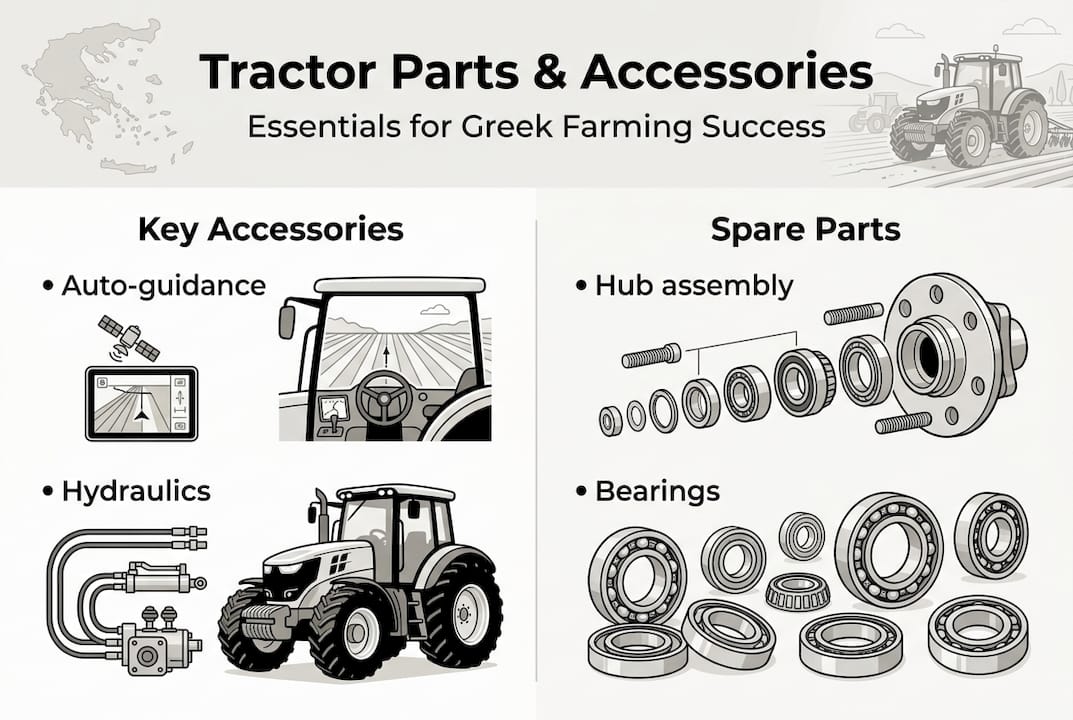
Here’s a practical comparison of the main accessory categories and how they apply to Greek farming conditions:
| Accessory type | Key benefit | Typical Greek use case |
|---|---|---|
| Auto-guidance systems | Reduces fuel and seed waste | Row crops in Thessaly, cotton fields |
| Hydraulic cylinders | Powers attachments reliably | Multi-tool farms, loader operations |
| Hub and axle assemblies | Improves traction and load handling | Mountain terrain, heavy haul |
| Electronics and GPS units | Data-driven field decisions | Precision spraying, irrigation timing |
| Weather monitoring stations | Local climate awareness | Viticulture, high-value crop protection |
The role of spare parts in farming goes far beyond simple replacement. Quality components from trusted sources like EKAGEM, which offers hubs, axles, bearings, and hydraulic cylinders specifically for agricultural machinery, ensure that your accessories actually perform under real Greek field conditions.
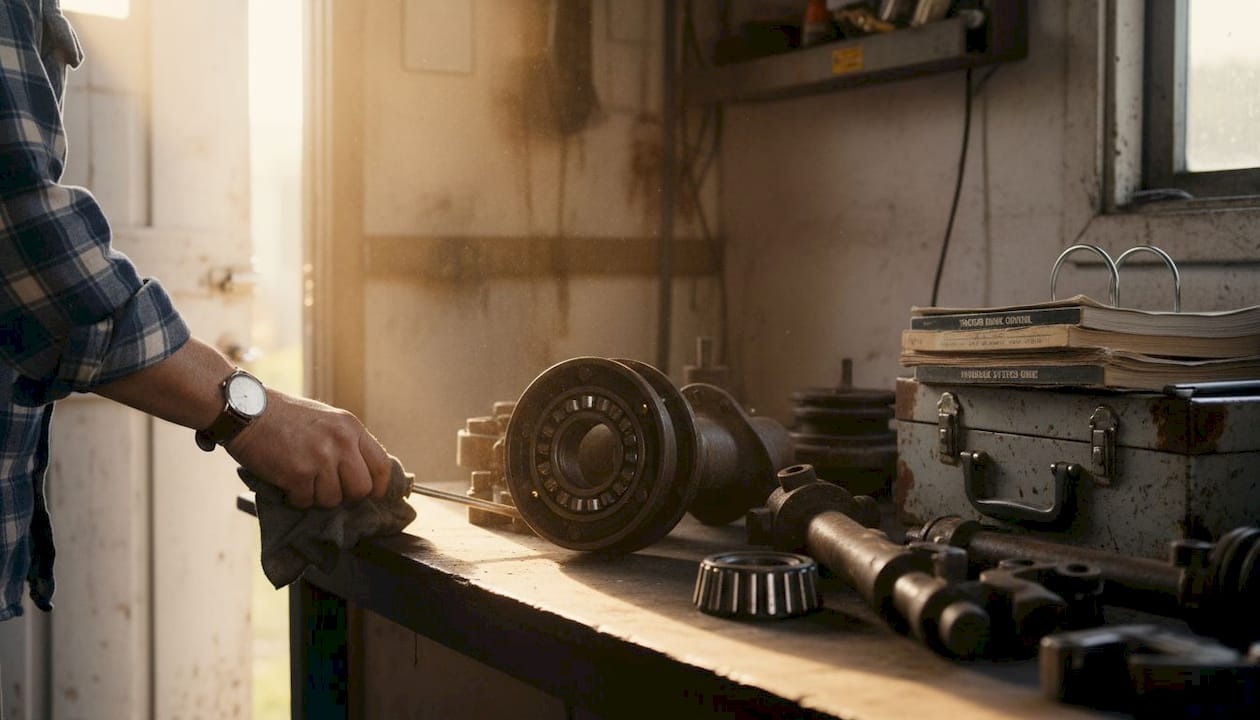
Pro Tip: Match your accessories to your tractor’s age and primary work type. A 20-year-old machine may not support modern digital guidance without an electrical system upgrade first. Always check compatibility before you buy.
When it comes to installation complexity, not all upgrades are the same:
Easy-to-install upgrades (DIY-friendly):
- GPS display mounts and basic tracking units
- Cab lighting and warning systems
- Mirror and visibility accessories
- Simple filter and fluid management tools
Complex retrofits (require professional fitting):
- Full auto-guidance steering systems
- Hydraulic circuit additions or replacements
- Hub and bearing assemblies
- PTO shaft and driveline modifications
If you’re investing in high-quality parts, understanding this split helps you plan your budget and schedule installation work during low-season downtime rather than mid-harvest.
Sourcing reliable tractor spare parts in Greece
Finding parts isn’t the hard part anymore. Finding the right parts from a reliable source is where most operators run into trouble. A cheap bearing that fails in week three of olive harvest costs far more than the money saved on the original purchase.
Here’s what to look for when evaluating any supplier:
- Supplier reputation: Check reviews, ask local farming cooperatives for referrals, and look for suppliers with established track records in your region
- Part compatibility verification: Always confirm part numbers match your specific tractor model and year, not just the brand name
- After-sales support: Can the supplier help you troubleshoot a fitment problem? Do they offer returns or warranties?
- Stock depth: A supplier with limited inventory may substitute parts under pressure. Broad stock, such as what EKAGEM provides across hubs, axles, bearings, and hydraulic cylinders, signals reliability
- Local presence: Suppliers with a regional base in Thessaloniki, Kavala, or nearby areas can support faster delivery and in-person consultation
Here’s a quick comparison of your sourcing options:
| Sourcing channel | Advantages | Disadvantages |
|---|---|---|
| Local distributors | Fast access, hands-on support, regional knowledge | Sometimes limited to specific brands |
| Online platforms | Wide selection, price comparison, 24/7 availability | Shipping times, harder to verify authenticity |
| Manufacturer agents | OEM quality guarantee | Higher prices, fewer independent options |
For seasonal tractor maintenance in Greece, having your parts ordered and on hand before the season begins is critical. Don’t wait until something breaks. And when you’re looking at parts quality, reading up on choosing OEM spare parts gives you a clear framework for weighing cost against reliability.
Maintenance best practices to extend tractor lifespan
Even the best parts wear out faster when maintenance is inconsistent. In Greek farming conditions, where equipment may sit unused through wet winters and then run hard through dry summers, a disciplined maintenance routine is your best investment.
Here’s what that looks like in practice:
Daily checks:
- Engine oil level and color
- Coolant level and hose condition
- Tire pressure, especially after rocky terrain
- Check for hydraulic fluid leaks under the machine
- Inspect brake function before field operation
Seasonal maintenance:
- Replace air filters before dusty harvest periods
- Lubricate all grease points before extended use
- Inspect and adjust wheel alignments
- Test all electronic systems and GPS calibration
- Flush and refill hydraulic fluid per manufacturer schedule
Annual tasks:
- Full inspection of hub assemblies and bearing clearances
- Replace worn belts and hoses proactively
- Check PTO shaft condition and driveline connections
- Service fuel injection system or carburetor
- Review full electrical system integrity
Parts like those offered by EKAGEM for hubs, axles, bearings, and hydraulic cylinders are built to last when properly maintained. But quality parts still fail if ignored.
Pro Tip: The most common mistake Greek operators make is ignoring small oil leaks or minor vibrations, assuming they’ll sort themselves out. They never do. A seal that costs 8 euros, left unaddressed, can destroy a hydraulic cylinder worth 400 euros within a season.
Signs a part needs replacing:
- Unusual noise during operation (grinding, knocking, squealing)
- Visible cracks, rust, or deformation
- Performance drop in hydraulic response or steering
- Increased fuel consumption without obvious cause
For detailed guidance, explore these quality maintenance tips and the full agricultural machinery maintenance guide to build a schedule that fits your specific equipment and crop calendar.
Why most Greek farmers underestimate the impact of accessories and spare parts
Here’s something we’ve observed consistently: Greek operators treat accessories as optional additions rather than performance infrastructure. It’s understandable. Budgets are tight, margins in agriculture are thin, and a tractor that runs feels like enough.
But that thinking is exactly what leads to the most expensive repairs. The majority of serious tractor breakdowns trace back to a neglected bearing, a deferred filter change, or a missing seal. None of these parts cost much on their own. Combined, their failure can mean a week of lost work during your most critical field window.
The farmers who stay ahead of their costs are the ones treating accessories and spare parts as investments, not expenses. They follow smart farming trends and understand that a 50-euro upgrade today may prevent a 500-euro breakdown next harvest.
There’s an old saying worth keeping in mind: “A tractor is only as strong as its weakest link.” That weak link is rarely the engine. It’s usually something small, overlooked, and cheap to fix early.
Explore trusted resources for tractor accessories and parts
At pexlivanidis.com, we’ve built a catalog of over 20,000 parts and accessories specifically for Greek farmers and machinery operators. Whether you’re upgrading for performance or replacing a worn component before harvest season, we have the depth of stock to support you. Start with the guide on essential machinery parts to understand which components matter most for your work type. Then browse the tractors accessories guide for curated recommendations based on Greek farming conditions. When you’re ready to fit what you’ve chosen, the installation guide for tractor accessories walks you through the process step by step. Free shipping is available within Greece on orders over 100 euros, with wholesale B2B options for larger operations.
Frequently asked questions
What does ‘tractor gr’ mean in the context of Greek farming?
‘Tractor gr’ refers to tractors, related accessories, technology, and spare parts tailored for Greek farmers. TractorGPS is one example of a Greek company offering precision agriculture solutions built specifically for this market.
What are the most important tractor accessories for Greek farms?
Auto-guidance systems, reliable hydraulics, and durable hub assemblies rank among the most critical upgrades. Suppliers like EKAGEM provide key fittings and spare parts designed for agricultural machinery used across Greece.
How can I ensure the spare parts I buy for my tractor are authentic?
Always buy from reputable suppliers, verify compatibility with your exact tractor model and year, and confirm that warranties and after-sales support are offered. Avoid suppliers who cannot provide part number documentation.
Why is regular maintenance more important in Greece?
Greece’s variable climate and diverse farming conditions put extra stress on equipment. Consistent maintenance prevents the kind of accelerated wear that comes from dust, heat, humidity, and rough terrain common across Greek farmland.
Is investing in modern tractor accessories really worth the cost?
Yes. TractorGPS solutions and similar precision upgrades demonstrably cut running costs, reduce waste, and extend equipment lifespan. The payback period on most smart accessories is shorter than most operators expect.