

Proper tractor maintenance can extend equipment lifespan by 30% while cutting breakdowns by up to 40%. For Greek farmers operating in demanding conditions, from the dusty fields of Northern Greece to the varied terrain across the mainland and islands, these improvements translate directly into lower repair costs and higher productivity. This guide delivers practical, evidence-backed strategies tailored to your local environment. You’ll discover how preventive care, quality parts selection, and smart scheduling protect your investment and keep your tractor running reliably season after season.
Table of Contents
- Key takeaways
- Understanding the importance of preventive maintenance for tractors in Greece
- Choosing the right parts: the impact of OEM vs non-OEM on tractor reliability
- Tailoring maintenance schedules and repair approaches for Greek farming conditions
- Maximizing the lifespan and operational efficiency through practical maintenance habits
- Explore expert tractor parts and maintenance resources at Pexlivanidis
- FAQ
Key Takeaways
| Point | Details |
|---|---|
| Preventive maintenance benefits | Regular inspections and scheduled care extend tractor life by about 30 percent and cut breakdowns by up to 40 percent. |
| OEM vs non OEM | OEM parts reduce failures by 25 percent compared with generic parts. |
| Hours and ROI gains | Regular upkeep can raise operating hours from four thousand to five thousand to fifteen thousand to twenty thousand and deliver about 120 percent annual ROI. |
| Local condition tailoring | Maintenance schedules should be tailored to dusty Northern Greece conditions to maintain reliability under local operating stresses. |
Understanding the importance of preventive maintenance for tractors in Greece
Preventive maintenance means performing scheduled inspections, adjustments, and replacements before components fail. This contrasts sharply with reactive repair, where you fix things only after they break. For Greek farmers, the difference is substantial. Preventive maintenance extends tractor lifespan by 30% and reduces breakdowns by 20-40%, keeping equipment operational during critical planting and harvest windows.
The financial case is equally compelling. Tractors receiving regular upkeep deliver 15,000-20,000 operational hours compared to just 4,000-5,000 hours for neglected machines. This nearly quadruples your equipment’s productive life. The return on investment reaches 120% annually when you factor in avoided emergency repairs, reduced downtime during peak seasons, and extended replacement cycles.
Proper maintenance protocols can extend tractor operational hours from 4,000-5,000 to 15,000-20,000, delivering 120% annual ROI through reduced breakdowns and extended equipment life.
Core preventive tasks every Greek farmer should master include:
- Daily visual inspections for leaks, loose bolts, and tire pressure
- Regular lubrication of moving parts according to manufacturer specifications
- Scheduled filter changes for air, fuel, and hydraulic systems
- Seasonal fluid checks and replacements matched to operating conditions
- Belt and hose inspections before intensive work periods
Pro Tip: Balance maintenance frequency carefully. While regular oil changes protect your engine, excessively frequent changes in dusty conditions can actually damage seals and gaskets, creating new problems while wasting money. Follow preventive maintenance benefits guidelines that account for your specific environment rather than generic schedules.
The key is consistency. Missing scheduled maintenance creates cascading failures where one worn component damages others. A clogged air filter forces the engine to work harder, accelerating wear on pistons and cylinders. A neglected hydraulic filter allows contaminants to score expensive pump components. Each skipped service compounds risk and cost. For more detailed strategies on maintaining agricultural equipment, explore quality maintenance tips for tractors that address Greek farming realities.
Choosing the right parts: the impact of OEM vs non-OEM on tractor reliability
Part quality directly determines maintenance outcomes. Original Equipment Manufacturer (OEM) parts are designed and tested specifically for your tractor model, matching exact specifications for materials, tolerances, and performance. Non-OEM or aftermarket parts may fit physically but often use different materials or manufacturing standards that compromise reliability.
The performance gap is measurable. OEM parts reduce failures by 25% compared to generic alternatives, while non-OEM components increase breakdown risk by 30%. In dusty Northern Greece conditions, where air filters and seals face extreme stress, this difference becomes critical.
| Factor | OEM Parts | Non-OEM Parts |
|---|---|---|
| Failure Rate | 25% lower than baseline | 30% higher than baseline |
| Initial Cost | Higher upfront investment | Lower purchase price |
| Lifespan | Matches or exceeds manufacturer specs | Variable, often shorter service life |
| Warranty Coverage | Typically preserves equipment warranty | May void manufacturer warranty |
| Performance Consistency | Guaranteed fit and function | Quality varies by supplier |
The risks of generic parts multiply in challenging environments. A substandard air filter in dusty conditions allows fine particles into the engine, scoring cylinder walls and contaminating oil. Inferior hydraulic seals leak under pressure, reducing lift capacity and potentially causing sudden failures during heavy loads. These failures don’t just cost money; they happen at the worst times, during planting or harvest when every hour counts.
When sourcing replacement parts, evaluate:
- Compatibility verification beyond basic model numbers
- Material specifications and manufacturing standards
- Supplier reputation and warranty terms
- Total cost of ownership including expected service life
- Availability of technical support and documentation
Pro Tip: OEM parts are essential for critical systems operating in high-dust environments, but over-maintenance creates its own problems. Changing fluids too frequently can damage seals and waste resources. Focus OEM investment on components where failure causes cascading damage: engine internals, hydraulic pumps, transmission parts. For guidance on parts selection, review choosing OEM tractor parts and understand why OEM parts matter for long-term reliability.
Balancing cost and reliability requires understanding which components justify premium parts. Filters, belts, and wear items with clear replacement intervals can sometimes use quality aftermarket alternatives. But for precision components like injectors, bearings, and electronic sensors, OEM parts prevent expensive secondary damage. The initial savings from cheap parts evaporate quickly when a failed component destroys surrounding systems. For more context on parts quality, explore tractor lifespan and parts quality considerations specific to Greek farming.
Tailoring maintenance schedules and repair approaches for Greek farming conditions
Greek farming presents unique challenges that demand adapted maintenance strategies. Coastal regions face salt air corrosion. Northern areas contend with heavy dust during summer operations. Mountainous terrain stresses drivetrains and brakes differently than flat fields. Your maintenance schedule must reflect these realities rather than following generic manufacturer intervals developed for different conditions.
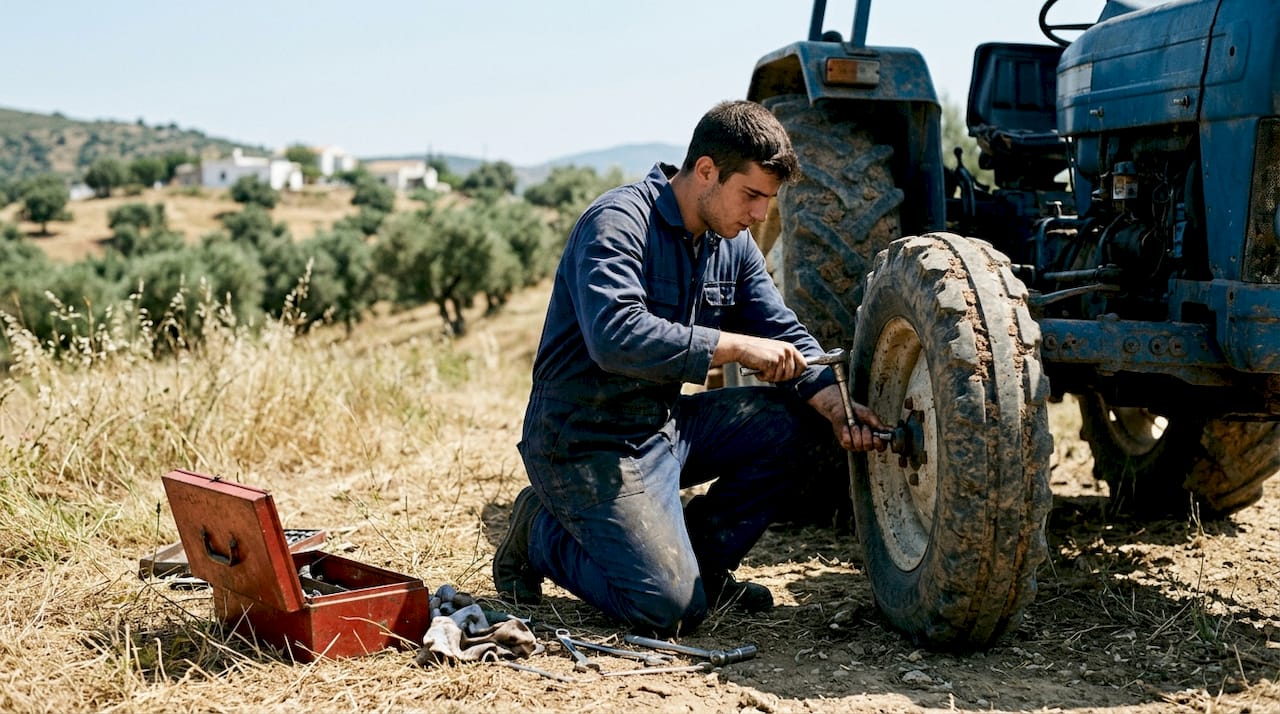
Dust exposure particularly affects Northern Greece operations. Adjusted schedules for dusty conditions prevent problems, but counterintuitively, excessively frequent oil changes can damage seals and gaskets. The key is matching service intervals to actual operating conditions through monitoring rather than arbitrary calendar dates.
When diagnosing tractor issues during repairs, follow these steps:
- Listen carefully for unusual sounds indicating bearing wear, belt slippage, or loose components
- Conduct visual inspections for fluid leaks, cracked hoses, and excessive wear patterns
- Use professional diagnostic tools to check electrical systems and sensor readings
- Document symptoms, conditions when problems occur, and any recent changes
- Consult service manuals for troubleshooting flowcharts specific to your model
- Test repairs under controlled conditions before returning to full field operations
Maintenance intervals should vary by exposure level:
| Component | Low Dust Zone | Moderate Dust | High Dust (Northern Greece) |
|---|---|---|---|
| Air Filter Inspection | Every 100 hours | Every 50 hours | Every 25 hours |
| Engine Oil Change | Every 250 hours | Every 200 hours | Every 150 hours |
| Hydraulic Filter | Every 500 hours | Every 400 hours | Every 300 hours |
| Coolant System Flush | Annually | Every 9 months | Every 6 months |
| Fuel Filter Replacement | Every 300 hours | Every 250 hours | Every 200 hours |
Pro Tip: Condition-based monitoring delivers better results than fixed schedules. Check oil color and consistency rather than changing by calendar date alone. Inspect air filters visually and replace when actually dirty rather than prematurely. Condition-based monitoring optimizes preventive systems by addressing actual wear rather than assumed intervals.
Documenting every repair and service creates valuable reference data. Record dates, hours, parts replaced, symptoms observed, and costs incurred. This history reveals patterns, helps predict future needs, and provides documentation for warranty claims or resale value. A simple notebook or smartphone app works fine; the key is consistency. For seasonal planning, consult seasonal tractor maintenance guide and preventative maintenance strategies tailored to Greek conditions.
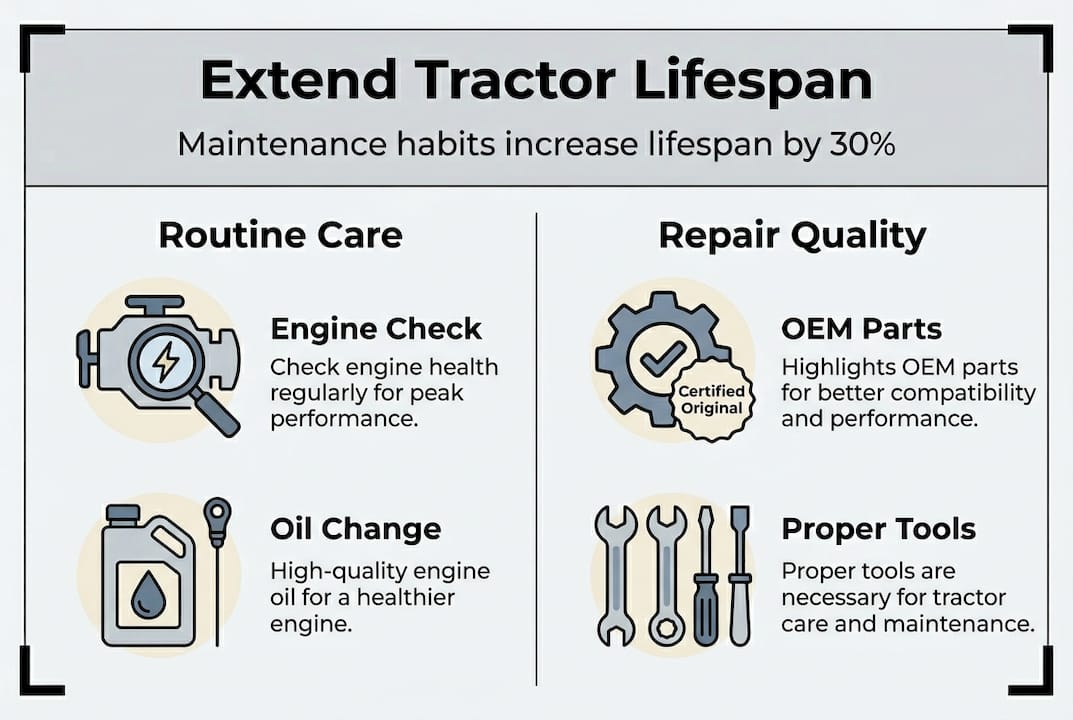
Repair methodologies matter as much as schedules. Diagnosing issues through sounds and visuals, using proper toolkits, and documenting every repair builds expertise over time. You’ll recognize patterns, catch problems earlier, and make smarter decisions about when to handle repairs yourself versus calling specialists. For comprehensive repair guidance, review the agricultural machinery repair guide covering diagnostic techniques and best practices.
Maximizing the lifespan and operational efficiency through practical maintenance habits
Consistent maintenance habits separate tractors that deliver decades of reliable service from those requiring premature replacement. The difference isn’t luck or initial quality alone; it’s the accumulation of daily attention and seasonal preparation that compounds into exceptional longevity.
Daily maintenance checks take just minutes but prevent hours of downtime:
- Walk around inspection for obvious damage, leaks, or loose components
- Tire pressure verification and visual tread assessment
- Fluid level checks for engine oil, coolant, and hydraulic reservoir
- Battery terminal inspection for corrosion or loose connections
- Safety system verification including lights, brakes, and warning indicators
Weekly tasks build on daily routines with deeper inspection. Lubricate grease points according to your model’s specifications. Clean or replace air filters if operating in dusty conditions. Check belt tension and look for cracking or fraying. Inspect hydraulic hoses for abrasion or swelling. These small investments prevent catastrophic failures.
Seasonal preparation deserves special attention. Before planting season, verify all systems handle the upcoming workload. Change fluids if approaching service intervals. Test implements and attachments under load. After harvest, clean thoroughly to prevent corrosion during storage. Stabilize fuel, disconnect batteries if storing long-term, and protect from weather exposure.
Best practices for keeping tractors running efficiently include:
- Storing equipment in covered areas to minimize weather exposure
- Cleaning mud and debris promptly to prevent corrosion
- Operating at appropriate speeds for conditions rather than maximum throttle
- Allowing proper warm-up time before heavy loads in cold weather
- Matching implement size to tractor capacity to avoid overloading
- Keeping accurate service records for warranty and resale purposes
Pro Tip: Proper cleaning and storage often get overlooked but dramatically affect longevity. Pressure washing removes corrosive residues, while covered storage prevents UV damage to hoses and seals. Spending 30 minutes on post-season cleaning saves hundreds in prevented rust and deterioration.
The return on investment from consistent maintenance is substantial. Remember, proper maintenance yields 15,000-20,000 hours versus 4,000-5,000 hours for neglected equipment, with 120% annual ROI when accounting for avoided breakdowns and extended service life. This isn’t theoretical; it’s the documented difference between systematic care and reactive repair.
Schedule professional inspections annually even when everything seems fine. Trained technicians spot developing problems you might miss: bearing wear, alignment issues, or electrical faults that haven’t caused obvious symptoms yet. Catching these early prevents expensive failures and dangerous breakdowns during critical operations. For seasonal strategies specific to Greek conditions, explore seasonal tractor care tips and practical maintenance approaches that reduce downtime by 40%.
Explore expert tractor parts and maintenance resources at Pexlivanidis
Implementing the maintenance strategies covered in this guide requires access to quality parts and reliable technical information. Pexlivanidis serves Greek farmers with over 20,000 agricultural machinery parts, specializing in tractor accessories and components designed for local operating conditions. Whether you need OEM replacements for critical systems or maintenance supplies for routine service, the platform provides detailed product information and expert support.
The site offers comprehensive guides supporting your maintenance efforts, from understanding different component types to executing specific service procedures. Free shipping within Greece on orders exceeding 100€ makes stocking essential maintenance supplies economical. Wholesale B2B membership options serve larger operations or farmers coordinating group purchases.
Key resources to support your tractor maintenance include:
- Types of agricultural machinery parts explaining component categories and selection criteria
- Maintain agricultural machinery guide covering systematic service approaches
- Agricultural machinery maintenance tips addressing common challenges and solutions
Exploring these resources helps you make informed decisions about parts selection, maintenance scheduling, and repair priorities. The combination of quality components and expert guidance gives you the tools to maximize your tractor’s lifespan and reliability under demanding Greek farming conditions.
FAQ
What are the most common tractor maintenance mistakes to avoid?
The most damaging mistakes include neglecting scheduled inspections, ignoring early warning signs like unusual sounds or vibrations, and using non-OEM parts excessively in critical systems. Many farmers also over-service certain components while neglecting others, creating imbalanced wear patterns. Avoid these problems by adhering to preventive schedules tailored to your operating conditions and investing in quality replacements for high-stress components. Documenting all service work helps identify patterns and prevent repeated mistakes.
How often should I change tractor oil in dusty regions of Greece?
In high-dust areas like Northern Greece, check oil every 150 hours rather than standard 250-hour intervals, but verify actual condition before changing. Excessively frequent oil changes can damage seals and gaskets while wasting money. Inspect oil color and consistency; if it remains clean, extending the interval slightly saves costs without compromising protection. Balance manufacturer recommendations with actual operating conditions rather than following rigid schedules that don’t account for environmental factors.
What are the best ways to diagnose tractor issues on the farm?
Listen for unusual sounds like knocking, grinding, or squealing that indicate bearing wear or component failure. Watch for visual signs including fluid leaks, excessive smoke, or abnormal vibrations during operation. Use basic diagnostic tools to check electrical systems and fluid pressures. Keep a repair log documenting symptoms, operating conditions when problems occur, and solutions attempted. This systematic approach helps you recognize patterns and communicate effectively with mechanics when professional service becomes necessary.
Why are OEM parts recommended over generic ones for Greek tractors?
OEM parts reduce failures by 25% while non-OEM alternatives increase breakdown risk by 30%, a critical difference in demanding Greek conditions. OEM components match exact specifications for materials, tolerances, and performance, ensuring reliable operation under stress. Generic parts often use inferior materials that fail prematurely, especially in dusty or corrosive environments common across Greek farmland. The higher initial cost of OEM parts is offset by longer service life, preserved warranties, and avoided secondary damage from component failures.