

Many farmers underestimate lubrication’s impact on tractor longevity, viewing it as routine upkeep rather than a performance multiplier. Yet proper lubrication directly determines whether your tractor runs smoothly for decades or faces costly breakdowns within years. Greek farmers operating in dusty, demanding terrain face unique challenges that make lubrication choices even more consequential. This guide explains why lubrication matters for agricultural equipment, how to adapt practices to Greek conditions, and which lubricant types deliver the best results for your investment.
Table of Contents
- Key takeaways
- How lubrication reduces wear and protects tractor components
- Adjusting lubrication practices for Greek farming conditions
- Comparing lubricant options: mineral versus vegetable-based oils
- Implementing centralized lubrication systems for efficiency and reliability
- Discover expert agricultural machinery maintenance solutions at Pexlivanidis
- Frequently asked questions
Key Takeaways
| Point | Details |
|---|---|
| Lubrication extends tractor life | Proper lubrication reduces friction, carries heat, and protects engine and drivetrain components to extend tractor life. |
| Dusty Greek conditions | In Greek farming, dust infiltration accelerates oil contamination and can thin viscosity in heat, demanding adjusted maintenance beyond standard OEM intervals. |
| Vegetable oils caveats | Vegetable oils can work but degrade faster than mineral oils. |
| OEM guidance matters | Following the OEM guidance ensures lubricant selection and service intervals match the equipment design and operating conditions. |
| Centralized lubrication benefits | Centralized lubrication systems save time and improve reliability by delivering consistent lubrication with less maintenance. |
How lubrication reduces wear and protects tractor components
Lubrication forms the foundation of tractor reliability by creating protective barriers between moving metal surfaces. Without adequate lubrication, friction generates excessive heat that warps components and accelerates wear exponentially. Understanding lubrication’s multiple protective functions helps you appreciate why cutting corners on oil quality or change intervals proves costly.
Lubrication performs five essential roles in tractors that work together to preserve mechanical integrity:
- Friction reduction between moving parts prevents metal-on-metal contact that causes scoring and seizure
- Cushioning absorbs shock loads from sudden torque changes or terrain impacts
- Heat transport carries thermal energy away from combustion chambers and bearings to prevent overheating
- Sealing fills microscopic gaps in piston rings to maintain compression and prevent gas leakage
- Cleaning suspends contaminants and combustion byproducts for removal through filtration
These functions protect your tractor’s most vulnerable systems. Engine bearings depend on oil films measured in micrometers to prevent catastrophic failure. Transmission gears require precise lubricant viscosity to mesh smoothly under load. Hydraulic systems need clean oil to maintain pressure and prevent valve sticking. Even your tractor’s differential and final drives rely on proper lubrication to handle the torque multiplication that powers through tough soil.
Proper lubrication doesn’t just reduce wear, it transforms your tractor from a collection of metal parts into a synchronized system where every component works in harmony to maximize power delivery and fuel efficiency.
The consequences of inadequate lubrication appear quickly in Greek farming conditions. Dust infiltration accelerates oil contamination, turning protective lubricant into abrasive slurry. High ambient temperatures thin oil viscosity, reducing load-carrying capacity. Extended operating hours between maintenance windows compound these stresses. Farmers who treat lubrication as optional maintenance face repair bills that dwarf the cost of quality oils and regular service.
Pro Tip: Check oil color and consistency weekly during peak season. Dark, gritty oil indicates contamination requiring immediate attention, while milky appearance suggests coolant intrusion that can destroy bearings within hours.
Adjusting lubrication practices for Greek farming conditions
Greek agriculture presents environmental challenges that demand modified maintenance approaches compared to manufacturer baseline recommendations. Dusty fields, rocky terrain, and summer heat stress lubricants beyond typical operating parameters. Farmers who blindly follow standard service intervals often discover their tractors need more frequent attention, while those who overcompensate waste money and risk unintended damage.
Dust represents the primary threat to tractor lubrication systems in Greek conditions. Fine particles infiltrate through breather caps, worn seals, and air intake systems. Once inside, dust acts as grinding compound that accelerates wear on cylinder walls, bearings, and hydraulic components. However, adjusting for dusty conditions requires balance, not simply doubling change frequency.
Excessively frequent oil changes create their own problems. Each drain and refill cycle stresses seals and gaskets as they adjust to temperature changes. New oil lacks the protective additive film that develops during initial operation. Frequent changes also increase disposal costs and environmental impact. The solution lies in condition-based monitoring rather than arbitrary calendar intervals.
Implement these lubrication checks adapted for Greek dust exposure:
- Inspect air filter condition weekly and clean or replace when restriction exceeds manufacturer limits
- Monitor oil level daily during intensive use periods to catch consumption or leak issues early
- Sample oil monthly for laboratory analysis measuring particle count and additive depletion
- Check hydraulic system filters every 50 hours and replace when differential pressure indicates saturation
- Examine seals and gaskets quarterly for hardening or cracking that allows contaminant entry
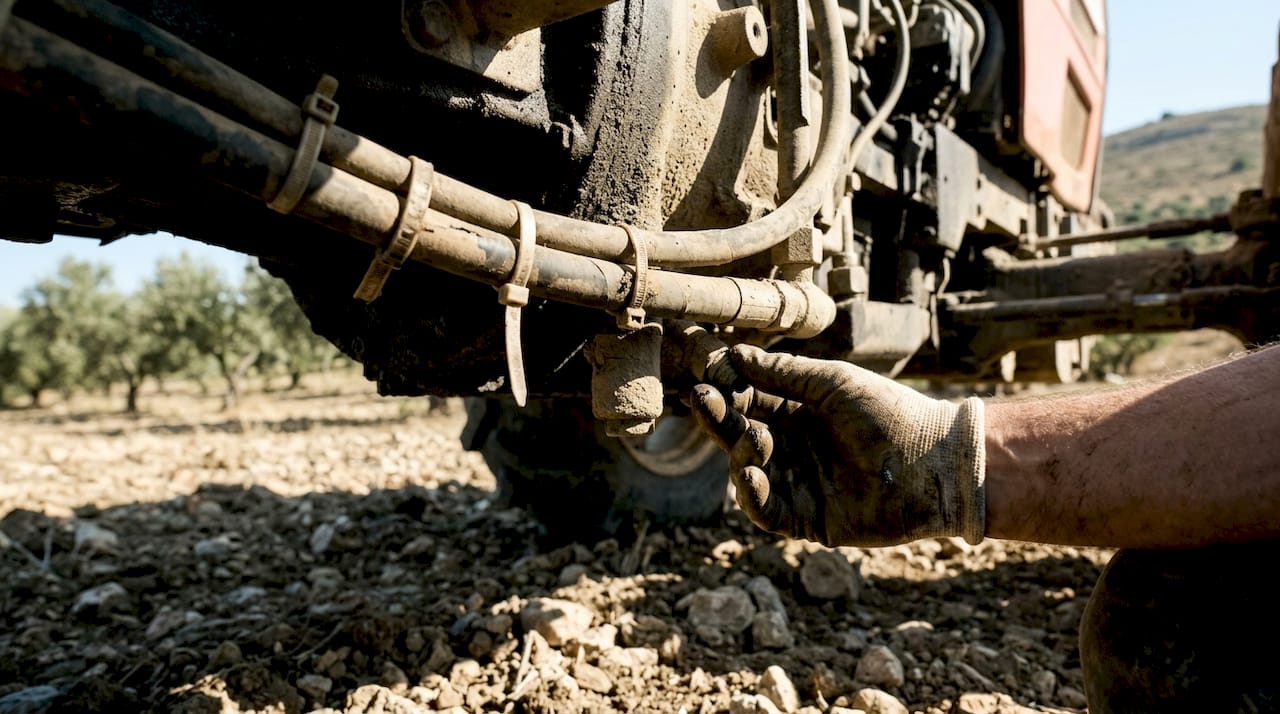
Terrain factors compound dust challenges. Rocky fields generate vibration that loosens fittings and cracks hoses. Steep slopes cause oil starvation as lubricant pools away from pickup points. Wet conditions introduce water contamination that promotes rust and degrades additives. Your oil selection must account for these variables.
Pro Tip: Extend oil life without increasing wear by installing bypass filtration systems that remove particles down to 1 micron. This approach keeps lubricant cleaner longer while avoiding the seal stress of frequent changes. Monitor viscosity and total base number through oil analysis to determine actual change points rather than guessing based on hours alone.
Seasonal maintenance requirements vary significantly across Greece’s agricultural calendar. Spring planting demands peak tractor performance when temperatures rise rapidly. Summer harvest operations expose equipment to maximum dust and heat. Fall tillage work stresses drivetrains with heavy loads. Winter storage periods require preservation strategies preventing corrosion. Adjust your lubrication program to match these seasonal demands rather than following generic schedules.
Comparing lubricant options: mineral versus vegetable-based oils
Farmers increasingly consider vegetable-based lubricants as alternatives to traditional mineral oils, driven by environmental concerns and potential performance benefits. Understanding the trade-offs between these options helps you make informed choices that balance sustainability with practical durability requirements. Recent research provides data showing where bio-lubricants excel and where they fall short.
Vegetable-based oils perform comparably to mineral universal tractor transmission oil in initial testing, maintaining similar viscosity and load-carrying capacity through the first 30 hours of operation. After this point, bio-lubricants show accelerated viscosity breakdown requiring more frequent monitoring. This degradation pattern stems from ester-based molecular structures that oxidize faster than petroleum hydrocarbons under heat and pressure.
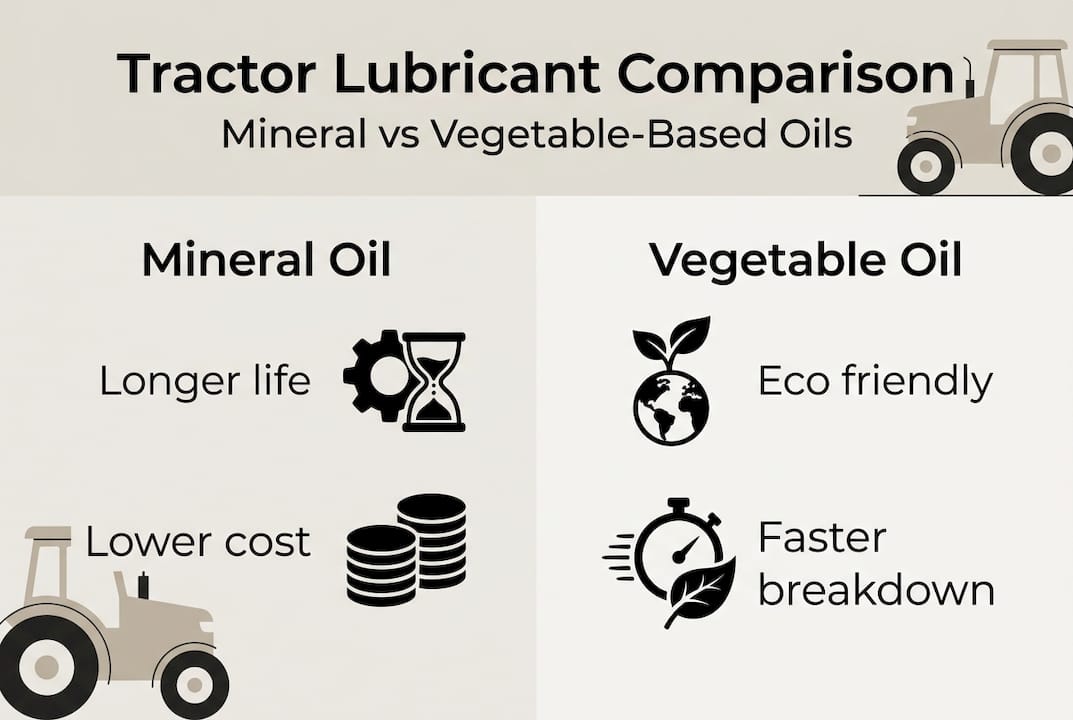
| Lubricant characteristic | Mineral UTTO | Vegetable-based oil |
|---|---|---|
| Initial viscosity stability | Excellent | Excellent |
| Viscosity after 30 hours | Stable | 8-12% reduction |
| Biodegradability | Poor (20-30%) | Excellent (90%+) |
| Temperature range | Wider (-25°C to 120°C) | Narrower (-15°C to 100°C) |
| Cost per liter | Lower | 30-50% higher |
| Change interval | Standard | 20-30% shorter |
Environmental advantages of bio-lubricants extend beyond biodegradability. Vegetable oils produce less toxic emissions during combustion or leakage. They demonstrate superior lubricity, meaning thinner films provide equivalent protection, potentially reducing friction losses. Renewable sourcing reduces petroleum dependency. These benefits appeal to farmers pursuing organic certification or operating near sensitive ecosystems.
Practical considerations temper enthusiasm for vegetable-based alternatives. Higher costs per liter combine with shorter change intervals to increase total lubrication expenses by 40-60% compared to mineral oils. Limited cold-weather performance restricts use in mountain regions or winter operations. Incompatibility with certain seal materials requires system modifications. Storage stability concerns demand careful inventory management to prevent oxidation before use.
Pro Tip: If testing vegetable-based lubricants, start with hydraulic systems rather than engines or transmissions. Hydraulics operate at lower temperatures with less contamination exposure, providing gentler introduction while you develop monitoring protocols. Track viscosity changes every 25 hours initially to establish degradation patterns specific to your operating conditions.
Deciding between mineral and vegetable lubricants depends on your specific situation. Farmers prioritizing maximum equipment protection and lowest total cost typically choose quality mineral oils. Those valuing environmental stewardship and willing to accept higher maintenance costs may prefer bio-alternatives. Many operations adopt hybrid approaches, using vegetable-based lubricants for hydraulics while retaining mineral oils for engines and transmissions where thermal stress proves most severe.
Implementing centralized lubrication systems for efficiency and reliability
Centralized lubrication systems automate grease delivery to multiple points simultaneously, eliminating manual greasing while ensuring consistent coverage. These systems prove particularly valuable for Greek farmers managing large equipment fleets or operating in dusty conditions where frequent lubrication prevents accelerated wear. Understanding system components and operating principles helps you evaluate whether this technology suits your operation.
Centralized systems consist of a reservoir, pump, distribution block, and feed lines connecting to individual lubrication points. The pump activates on programmed intervals or operating hour counts, delivering measured lubricant doses to each point. Progressive divider valves ensure equal distribution even if one line becomes restricted. Visual indicators confirm successful delivery, alerting operators to blockages or empty reservoirs before damage occurs.
Top five benefits centralized lubrication delivers for tractor maintenance:
- Time savings eliminate 30-45 minutes of daily manual greasing, freeing operators for productive tasks
- Improved coverage ensures hard-to-reach points receive proper lubrication without shortcuts or missed fittings
- Reduced wear maintains optimal lubricant films continuously rather than allowing depletion between manual services
- Lower downtime prevents bearing failures and seized joints that cause unexpected breakdowns during critical seasons
- Easier monitoring centralizes inspection at reservoir and indicator points rather than crawling under equipment
Operating centralized systems requires minimal training but demands consistent attention. Check reservoir levels weekly and refill before depletion to prevent air entry that blocks lines. Inspect visual indicators after each automatic cycle to verify delivery. Clean fittings quarterly to prevent contamination. Replace feed lines showing cracks or hardening before failure occurs. Following OEM specifications for grease type and pump timing ensures optimal performance.
System installation costs range from €800-2,500 depending on tractor size and number of lubrication points. Payback periods typically span 2-3 years through reduced labor and prevented repairs. Retrofitting older tractors proves feasible but requires careful planning to route lines without interference. New equipment increasingly includes factory-installed systems, reflecting industry recognition of their value.
Greek farming conditions particularly favor centralized lubrication adoption. Dust infiltration at manual fittings decreases when automated systems maintain positive pressure. Terrain vibration that loosens traditional grease fittings affects centralized systems less due to permanent line connections. Summer heat that hardens grease in manual guns doesn’t impact pumped delivery. These advantages compound over years to significantly extend component life in agricultural machinery operating under demanding conditions.
Discover expert agricultural machinery maintenance solutions at Pexlivanidis
Maintaining optimal tractor lubrication requires access to quality products and expert guidance tailored to Greek farming realities. Pexlivanidis combines over two decades of agricultural machinery experience with an extensive inventory of genuine parts and lubricants suited to local conditions. Whether you need OEM-specified oils, filtration upgrades, or centralized lubrication components, you’ll find solutions backed by knowledgeable support. Explore our comprehensive agricultural machinery maintenance guide for detailed procedures covering every system. Learn about essential agricultural machinery parts that work together to keep your equipment productive. Access proven agricultural machinery maintenance tips developed specifically for Greek farmers facing dust, heat, and demanding terrain.
Frequently asked questions
What is the role of lubrication in tractor engines?
Lubrication reduces friction between moving engine parts like pistons, bearings, and camshafts, preventing metal-on-metal contact that causes wear. It also transports heat away from combustion chambers, cleans by suspending contaminants for filtration, and seals piston rings to maintain compression. These combined functions ensure smooth operation and prevent premature engine failure.
How often should farmers in Greece check tractor lubricants?
Check oil levels daily during intensive use and inspect condition weekly for signs of contamination or degradation. Greek dust exposure accelerates lubricant breakdown, requiring more frequent monitoring than manufacturer baseline recommendations. However, avoid excessively frequent oil changes that stress seals and waste resources. Use condition-based analysis rather than arbitrary intervals.
Are vegetable-based oils effective for tractor lubrication?
Vegetable-based oils perform similarly to mineral oils initially but show 8-12% viscosity reduction after 30 hours of operation. They offer excellent biodegradability and renewable sourcing but require 20-30% shorter change intervals and cost 30-50% more per liter. Consider them for hydraulic systems first while monitoring degradation patterns before expanding use.
What are the advantages of centralized lubrication systems?
Centralized systems save 30-45 minutes daily by automating grease delivery to multiple points simultaneously. They ensure consistent coverage of hard-to-reach fittings, reduce wear through continuous lubrication, and lower unexpected downtime from bearing failures. Visual indicators simplify monitoring, making them ideal for dusty Greek farms where manual greasing proves challenging and time-consuming.