

A single overlooked hydraulic leak can drain your tractor’s fluid within hours, leaving you stranded mid-field during critical harvest periods. Greek farmers face unique challenges maintaining hydraulic systems due to intense dust exposure and seasonal temperature swings that accelerate component wear. This comprehensive checklist addresses the specific maintenance needs for tractor hydraulics in Greece’s demanding agricultural environment, helping you prevent the 80% of sudden failures caused by preventable fluid and leak issues. By following these targeted inspection routines and seasonal adjustments, you’ll maximize machine uptime and protect your investment in critical farming equipment.
Table of Contents
- Key takeaways
- Understanding agricultural tractor hydraulics and common issues
- Essential hydraulics components checklist for regular maintenance
- Seasonal and environment-specific maintenance tips for Greek farmers
- Troubleshooting hydraulic system issues and preventive strategies
- Explore comprehensive agricultural machinery maintenance resources
- Frequently asked questions
Key Takeaways
| Point | Details |
|---|---|
| Leaks drive failures | Leaks around hoses and seals are the leading cause of sudden hydraulic failures when fluid drops to critically low levels. |
| Monitor operating limits | Maintain awareness of pressures around 2600 to 2900 psi and fluid temperature rises below 185 to 195 F to protect seals and components. |
| Daily fluid checks | Check the fluid level daily with the dipstick and use only manufacturer specified fluids such as UTTO or J20C. |
| Inspect for leaks and noises | Visually inspect hoses and fittings for fresh oil leaks and listen for unusual pump noises during startup and operation. |
| Seasonal maintenance adjustments | Follow seasonal adjustments with extra focus in winter to extend system longevity in Greece’s dusty, temperature swinging environment. |
Understanding agricultural tractor hydraulics and common issues
Your tractor’s hydraulic system powers essential functions including three-point hitch operation, implement control, power steering, and auxiliary attachments. This network of pumps, valves, cylinders, and hoses relies on pressurized fluid to transfer force efficiently across the machine. When any component fails, your entire operation can grind to a halt during the most critical farming periods.
The role of hydraulics in tractors becomes immediately apparent when systems malfunction. Greek farmers commonly encounter three primary failure modes that signal trouble before complete breakdown occurs. First, fluid leaks around hoses, fittings, and seals represent the most dangerous issue because leaks cause 80% of sudden hydraulic failures when oil levels drop critically low.
Second, slow or jerky three-point hitch movement indicates internal wear, contamination, or insufficient fluid pressure reaching the lift cylinders. Third, unusual pump noises like whining or grinding sounds warn of impending pump failure from cavitation, worn components, or contaminated fluid damaging internal surfaces. Each symptom provides early warning if you know what to watch for during daily operations.
Pro Tip: Check your hydraulic fluid color weekly by wiping the dipstick on white paper. Clean fluid appears amber or light brown, while dark, milky, or particle-filled fluid signals immediate maintenance needs.
Understanding normal operating parameters helps you recognize problems early. Most agricultural tractor hydraulic systems operate at pressures between 2600 and 2900 psi, with fluid temperature rises staying below 185 to 195°F during normal work. Exceeding these limits accelerates seal degradation, fluid breakdown, and component wear. Regular monitoring catches deviations before they cause expensive failures.
“Hydraulic system health directly determines tractor reliability. A well-maintained system operates smoothly for thousands of hours, while neglected components fail unexpectedly, costing farmers both repair expenses and lost productivity during critical seasons.”
Essential hydraulics components checklist for regular maintenance
Implementing a systematic maintenance routine protects your hydraulic investment and prevents costly downtime. Follow this comprehensive checklist adapted for Greek farming conditions, adjusting frequency based on your specific dust exposure and operating hours.
Daily and weekly inspection tasks:
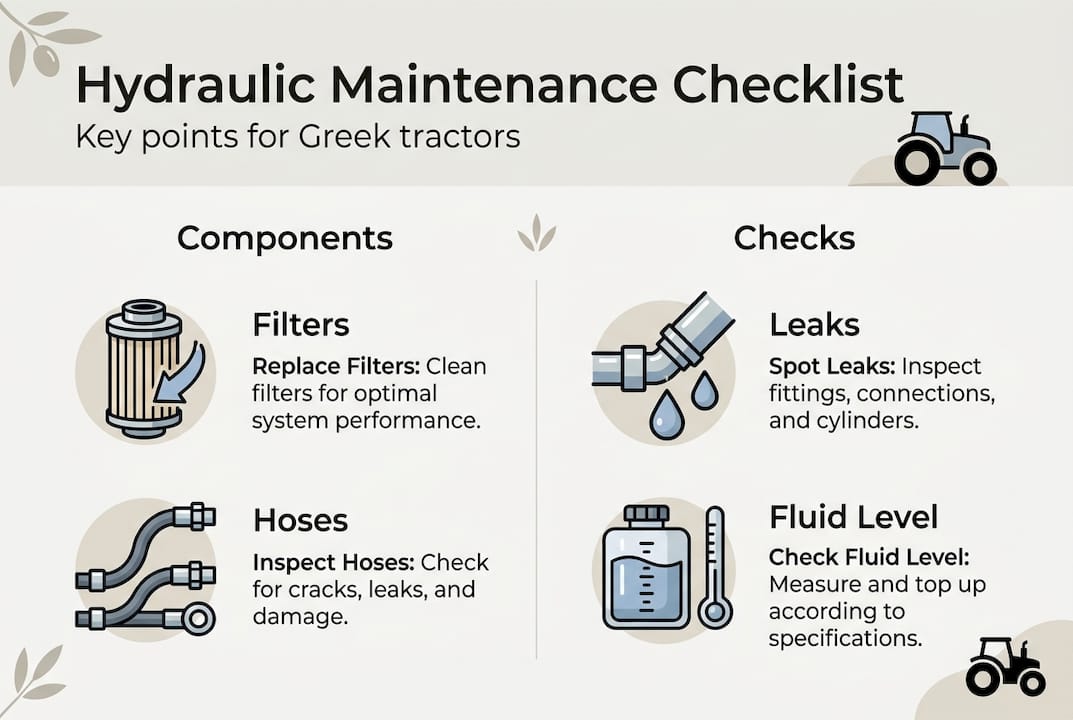
- Check hydraulic fluid level using the dipstick before starting work each day, topping up only with manufacturer-specified fluid like J20C for John Deere or UTTO for universal applications.
- Visually inspect all visible hoses, fittings, and cylinder rods for fresh oil residue indicating active leaks requiring immediate attention.
- Listen for unusual pump noises during startup and operation, noting any changes in sound patterns that suggest developing problems.
- Test three-point hitch response by cycling through full range of motion, watching for smooth, consistent movement without jerking or delays.
- Monitor hydraulic oil temperature during heavy work, ensuring it stays within the 185 to 195°F rise limit to prevent thermal damage.
Monthly maintenance procedures:
- Remove and inspect hydraulic filters for dirt accumulation, replacing them if visibly contaminated rather than waiting for scheduled intervals.
- Check all hydraulic hose routing to ensure no rubbing against sharp edges or hot surfaces that could cause premature failure.
- Measure system pressure using a diagnostic gauge at key test ports, verifying readings fall within the 2600 to 2900 psi specification range.
- Lubricate all pivot points, linkage pins, and movable joints on implements to reduce wear and prevent corrosion in coastal regions.
- Inspect quick-connect couplers for dirt, damage, or worn seals that could introduce contamination when connecting implements.
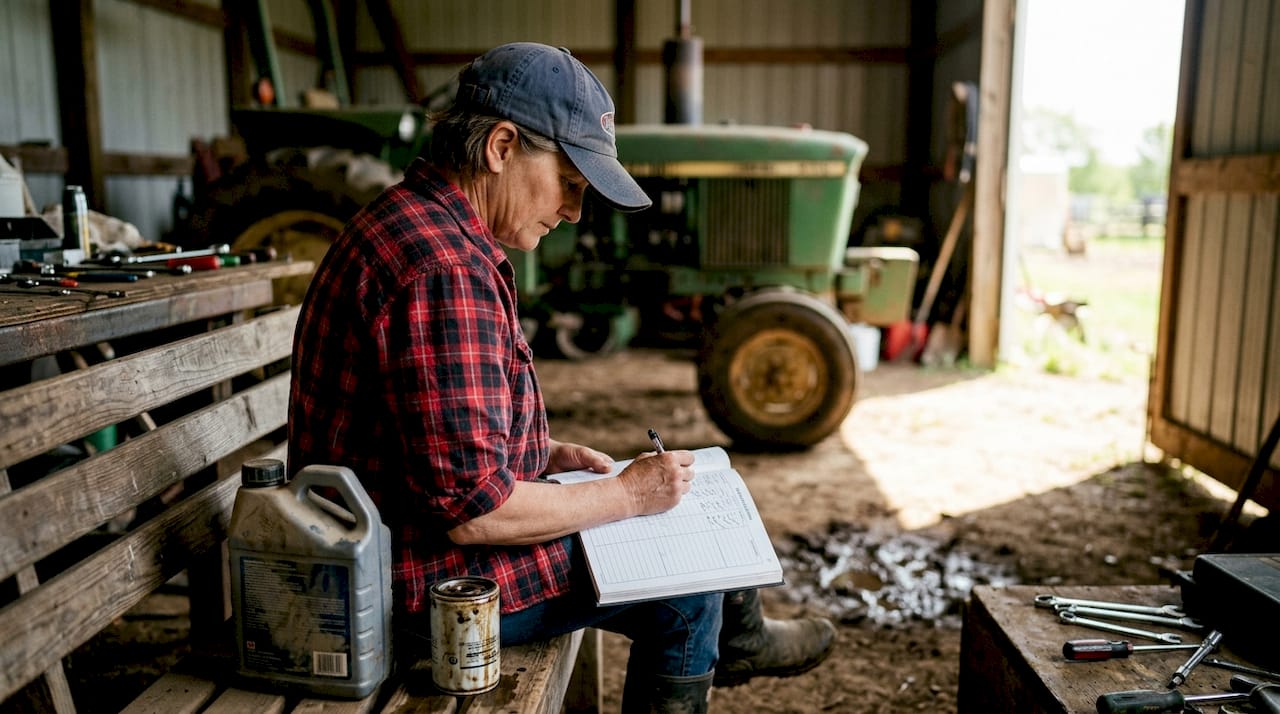
Pro Tip: Keep a maintenance log noting fluid levels, filter changes, and any unusual observations. Patterns in your notes often reveal developing problems before complete failure occurs.
The agricultural machinery checklist tips emphasize using only recommended fluids for your specific tractor model. Mixing incompatible hydraulic oils causes additive conflicts, reduced lubrication performance, and accelerated component wear. Always verify compatibility before adding any fluid to your system.
| Component | Inspection Frequency | Key Check Points | Replacement Indicator |
|---|---|---|---|
| Hydraulic fluid | Daily | Level, color, contamination | Dark color, milky appearance, particles |
| Filters | Monthly (dusty conditions) | Dirt accumulation, pressure drop | Visible contamination, flow restriction |
| Hoses | Weekly | Cracks, bulges, leaks, routing | Surface damage, age over 5 years |
| Fittings | Weekly | Tightness, corrosion, leaks | Stripped threads, persistent leaks |
| Cylinder seals | Monthly | Rod scoring, fluid leakage | Active leaking, visible rod damage |
| Pump | Daily (by sound) | Unusual noises, pressure output | Whining, grinding, pressure loss |
This structured approach catches most problems during early stages when repairs cost less and cause minimal disruption to your farming schedule. Consistency matters more than perfection, so establish a routine you can maintain throughout busy seasons.
Seasonal and environment-specific maintenance tips for Greek farmers
Greece’s agricultural regions present unique hydraulic maintenance challenges requiring specialized approaches beyond standard manufacturer recommendations. Intense summer dust, coastal salt exposure, and winter moisture demand adjusted maintenance schedules to protect your equipment investment.
Dust represents the primary enemy of hydraulic systems in Greek fields. Fine particles infiltrate through breather caps, worn seals, and during filter changes, causing rapid wear of pumps, valves, and cylinders. Combat this by increasing filter inspection frequency to every 50 operating hours during dry, dusty periods rather than following standard 200-hour intervals. Consider upgrading to high-efficiency filters with finer micron ratings if your tractor operates in particularly dusty conditions.
Summer maintenance priorities:
- Clean external surfaces around filter housings, reservoir caps, and fill ports before opening to prevent dirt entry during service
- Monitor fluid temperatures closely during peak heat, as ambient temperatures above 95°F reduce cooling capacity
- Inspect hoses for sun damage and heat cracking, replacing any showing surface deterioration before they fail
- Check cooling system effectiveness if your tractor has hydraulic oil coolers, cleaning fins and verifying fan operation
Winter brings different challenges as temperatures drop and moisture increases. Cold hydraulic fluid flows sluggishly, causing slow implement response and increased pump wear during cold starts. Moisture condensation inside reservoirs promotes rust and fluid contamination. The seasonal tractor care Greece 2026 guide emphasizes proactive fluid changes before winter arrives.
Winter preparation checklist:
- Switch to cold-weather hydraulic fluid formulations before temperatures drop below 50°F to maintain proper viscosity
- Drain any water accumulated in reservoir bottoms through drain plugs, as moisture accelerates corrosion
- Allow tractors to warm up for 5 to 10 minutes before operating hydraulics in freezing conditions
- Store equipment in covered areas when possible to minimize condensation and temperature cycling
Pro Tip: Schedule your biannual fluid changes for late spring and late fall, timing them to prepare your system for the upcoming season’s extreme conditions while flushing out accumulated contamination.
Research shows biannual hydraulic fluid changes boost efficiency by 25% in Greece’s challenging environment. Fresh fluid provides better lubrication, improved wear protection, and superior contamination control compared to oil that has accumulated moisture, dust, and oxidation products over extended periods.
| Season | Primary Threat | Fluid Type | Inspection Frequency | Special Considerations |
|---|---|---|---|---|
| Summer | Dust, heat | Standard viscosity (ISO 46) | Every 50 hours | Monitor temperature, clean externals before service |
| Winter | Cold, moisture | Low-temperature formula | Every 100 hours | Allow warm-up, drain condensation, covered storage |
| Spring | Pollen, variable temps | Transition to standard | Every 75 hours | Complete fluid change, thorough filter replacement |
| Fall | Harvest dust, prep | Cold-weather transition | Every 50 hours | Pre-winter fluid change, seal inspection |
The tractor maintenance checklist Greece 2026 incorporates these seasonal adjustments into a comprehensive year-round program. Farmers who adapt their maintenance schedules to match environmental conditions report up to 40% less unexpected downtime compared to those following only standard manufacturer intervals.
Troubleshooting hydraulic system issues and preventive strategies
Recognizing early warning signs separates farmers who experience minor inconveniences from those facing major breakdowns during critical operations. Your hydraulic system communicates its condition through performance changes, unusual sounds, and visual clues that demand immediate attention.
Slow hitch movement and pump whining indicate impending hydraulic failure requiring urgent diagnosis. Sluggish three-point hitch response typically results from low fluid levels, internal valve wear, or cylinder seal leakage allowing pressure to bypass instead of creating movement. Address this by first checking fluid level, then testing system pressure, and finally inspecting cylinders for external leakage.
Pump whining or cavitation noises signal air entering the system, restricted inlet flow, or worn pump components. Check for loose suction line connections, collapsed inlet hoses, or clogged inlet screens restricting fluid flow to the pump. Continuing to operate with a whining pump accelerates internal damage, turning a simple repair into expensive pump replacement.
Common problems and diagnostic steps:
- Erratic implement movement: Check for air in system, inspect for suction side leaks, verify filter is not clogged restricting flow
- Hydraulic system overheating: Verify oil level is adequate, check for proper fluid viscosity, inspect cooler for blockage, reduce work intensity
- Fluid foaming in reservoir: Indicates air entrainment from loose connections, damaged pump seal, or overfilled reservoir creating turbulence
- Cylinder drift when holding load: Signals internal valve leakage requiring valve rebuild or replacement to restore holding capacity
- Weak lift capacity: Test system pressure, inspect for external leaks, check pump output, verify control valve adjustment
Pro Tip: Assemble an emergency hydraulic repair kit containing spare hoses in common lengths, assorted fittings, hose clamps, thread sealant, and five gallons of your specified hydraulic fluid. This kit enables quick temporary repairs preventing extended downtime in remote fields.
Preventive maintenance delivers significantly better return on investment than reactive repairs. A planned filter change costs $30 and takes 20 minutes, while the pump failure caused by a clogged filter costs $800 plus days of downtime during harvest. Regular inspections catch pressure anomalies, developing leaks, and fluid degradation before they cascade into major component failures.
The agricultural equipment troubleshooting guide provides detailed diagnostic flowcharts for systematic problem solving. When facing hydraulic issues, work methodically from simple checks like fluid level and filter condition toward more complex diagnostics requiring pressure gauges and flow meters.
Document every maintenance task, repair, and unusual observation in a dedicated logbook for each tractor. Patterns emerge over time revealing recurring problems, component life expectancy, and optimal service intervals for your specific operating conditions. This historical data guides future maintenance decisions and helps identify when component replacement becomes more economical than continued repairs.
Establish relationships with reliable parts suppliers who stock hydraulic components for your tractor models. Quick access to quality replacement hoses, filters, seals, and fittings minimizes downtime when failures occur despite your best preventive efforts. Keeping critical spare parts on hand for older tractors provides insurance against obsolete component availability.
Explore comprehensive agricultural machinery maintenance resources
Maintaining peak hydraulic performance requires ongoing education and access to quality parts when service becomes necessary. The agricultural machinery maintenance guide offers detailed procedures for servicing every major system on your tractor, helping you develop comprehensive maintenance skills beyond just hydraulics. Understanding how different systems interact improves your diagnostic abilities and prevents cascading failures.
When replacement parts become necessary, quality matters significantly for hydraulic components. The types of agricultural machinery parts guide explains differences between OEM, aftermarket, and economy options, helping you make informed purchasing decisions balancing cost against reliability. Hydraulic hoses and seals particularly benefit from premium quality specifications given their critical role in system integrity.
Proper installation techniques ensure replacement parts deliver expected service life. The tractor accessory installation guide covers best practices for hydraulic connections, torque specifications, and system bleeding procedures that prevent premature failures. Even quality parts fail quickly when installed incorrectly or without proper preparation.
Frequently asked questions
What fluids should I use for tractor hydraulics?
Use only manufacturer-specified hydraulic fluids matching your tractor model’s requirements, such as J20C for John Deere or UTTO (Universal Tractor Transmission Oil) for multi-purpose applications. Never mix different fluid types, as incompatible additives cause performance problems and accelerated wear. Maintain fluid temperature rises below 185 to 195°F during operation to prevent thermal breakdown that degrades lubrication properties and damages seals.
How often should hydraulic filters be inspected in Greece?
Inspect hydraulic filters every 50 operating hours during dusty conditions rather than following standard 200-hour intervals recommended for cleaner environments. Greece’s agricultural regions expose equipment to intense dust that accelerates filter loading and contamination. Replace filters immediately when visual inspection shows dirt accumulation rather than waiting for scheduled service intervals, as clogged filters restrict flow and damage pumps.
What are early signs of hydraulic failure to watch for?
Watch for three critical warning signs indicating developing hydraulic problems: fresh oil residue around hoses, fittings, or cylinders signaling active leaks; slow or jerky three-point hitch movement suggesting internal wear or pressure loss; and unusual pump noises like whining or grinding indicating cavitation or component damage. Address these symptoms immediately through systematic diagnosis to prevent complete system failure during critical farming operations.
Are seasonal adjustments really necessary for hydraulic maintenance in Greece?
Yes, seasonal maintenance adjustments significantly impact system reliability and performance in Greece’s variable climate. Switching to cold-weather hydraulic fluids before winter prevents sluggish operation and moisture damage, while increased filter inspection frequency during dusty summer months prevents contamination failures. Farmers implementing seasonal adjustments report 40% less unexpected downtime, and biannual fluid changes improve efficiency by 25% compared to extended service intervals.