

Most farmers assume a warranty is a warranty. Buy the part, keep the receipt, and if something breaks, the supplier fixes it. Simple, right? Not quite. Warranty policies for tractor spare parts in Greece vary significantly between suppliers, and the gap between what the law guarantees and what a supplier actually offers can cost you real money. This guide breaks down exactly what Greek and EU law entitles you to, how major suppliers compare, and what practical steps protect your investment when a part fails.
Table of Contents
- What does a spare parts warranty really mean?
- Greek and EU warranty laws: What you’re entitled to
- Supplier policies: Comparing major tractor parts warranties in Greece
- OEM vs aftermarket: How part origin affects your warranty
- Limitations, exclusions, and claim process: What most people miss
- Practical tips for maximizing your warranty protection
- Find the right parts and coverage for your machinery
- Frequently asked questions
Key Takeaways
| Point | Details |
|---|---|
| Know your legal rights | Greek and EU law guarantee at least a 24-month warranty on defective spare parts. |
| Compare supplier policies | Warranty terms and coverage differ widely among Greek suppliers, so read the contract carefully. |
| Choose OEM for confidence | Using OEM parts usually keeps your tractor’s original warranty intact and minimizes risk of costly repairs. |
| Check exclusions and steps | Understand what’s not covered, save invoices, and follow each supplier’s claim procedure precisely. |
What does a spare parts warranty really mean?
A warranty is a supplier’s written promise to repair or replace a part if it turns out to be defective. That sounds straightforward, but the key word is defective. A warranty covers problems that existed before you used the part, specifically faults in materials and workmanship. It does not cover parts that simply wear out over time through normal use.
For Greek farmers and machinery operators, this distinction matters enormously. A cracked hydraulic fitting caused by a casting flaw is a warranty issue. A worn-out clutch disc after two seasons of heavy fieldwork is not. Knowing this boundary helps you avoid wasting time on claims that will be rejected, and it helps you budget for maintenance costs that fall outside warranty coverage.
Here is what a standard spare parts warranty typically covers and excludes:
- Covered: Defects in raw materials, manufacturing errors, parts that fail under normal operating conditions
- Covered: Replacement or repair at no cost within the warranty period
- Not covered: Normal wear and tear (seals, filters, belts)
- Not covered: Damage from misuse, incorrect installation, or unauthorized modifications
- Not covered: Cosmetic damage that does not affect function
As a general benchmark, warranty periods in Greece typically range from 12 to 24 months for defects in materials and workmanship under normal use. Understanding this range before you purchase helps you compare suppliers on equal footing. You can also read more about how spare parts warranty impact your overall maintenance budget.
Key takeaway: A warranty is not a maintenance plan. It covers defects, not deterioration. If you treat it like a service contract, you will be disappointed.
Greek and EU warranty laws: What you’re entitled to
With warranty basics in mind, it is critical to recognize your legal rights as a buyer in Greece. The law does not leave this entirely up to suppliers.
Greece operates under EU consumer protection law, and Greek Law 2251/1994 mandates a minimum 2-year warranty for defects in consumer goods. Agricultural spare parts sold to individual buyers generally fall under this framework. Suppliers can offer more coverage, but they cannot legally offer less than this minimum.
Here is what your legal rights look like in practice:
- Minimum 24-month protection: Any defective spare part sold to a consumer in Greece must be covered for at least two years from the date of purchase.
- Proof of purchase is essential: You must keep your invoice or receipt. Without it, you have no legal standing to make a claim.
- Supplier obligations are enforceable: If a supplier refuses a valid claim, you can escalate to the Greek Consumer Ombudsman or pursue resolution through local courts, including those in Thessaloniki and Kavala.
- Supplier terms cannot override the law: If a supplier’s written policy offers only 12 months, the legal minimum of 24 months still applies for consumer purchases.
Pro Tip: Always ask for a printed or emailed invoice at the time of purchase, even for small parts. A single missing receipt can block a legitimate warranty claim worth hundreds of euros.
One important nuance: the 24-month legal minimum applies most clearly to consumer purchases. If you buy as a registered business (B2B), different commercial terms may apply, and supplier contracts can set shorter periods. This is a critical distinction for operators who purchase through wholesale accounts. Reviewing your tractor maintenance guide alongside your warranty terms helps you plan smarter across both fronts.
Important stat: The EU’s consumer protection framework covers over 450 million buyers across member states, and Greece enforces these standards through its General Secretariat for Consumer Affairs.
Supplier policies: Comparing major tractor parts warranties in Greece
While the law sets a baseline, actual coverage depends heavily on where you shop. Two suppliers can both be legally compliant yet offer very different practical experiences when a part fails.
Here is how two well-known Greek suppliers compare:
| Supplier | Warranty length | Main exclusions | Claim process |
|---|---|---|---|
| Interzag | 24 months | Misuse, wear, unauthorized repair | Factory service required, customer ships part |
| Pappas Tools | 12 months | Accessories, improper use, no proof | Invoice required, part returned for inspection |
The differences are real and practical. Interzag’s 24-month policy aligns with the legal minimum and requires factory-authorized service for claims. Pappas Tools offers 1-year warranty coverage on new products, which is shorter and excludes accessories entirely.
What this means for you:
- Read the fine print before you buy. A cheaper part from a supplier with a 12-month policy may cost more in the long run if it fails in month 14.
- Check whether factory service is required. Some suppliers will deny claims if the part was installed by an unauthorized technician.
- Understand the shipping terms. In most cases, you pay to ship the defective part back. Factor that into your cost calculation.
- No industry-wide standard exists. There is no single warranty policy that all Greek agricultural parts suppliers follow, which makes comparison shopping genuinely important.
OEM vs aftermarket: How part origin affects your warranty
Who you buy from is not the only factor. What you buy can be just as critical.
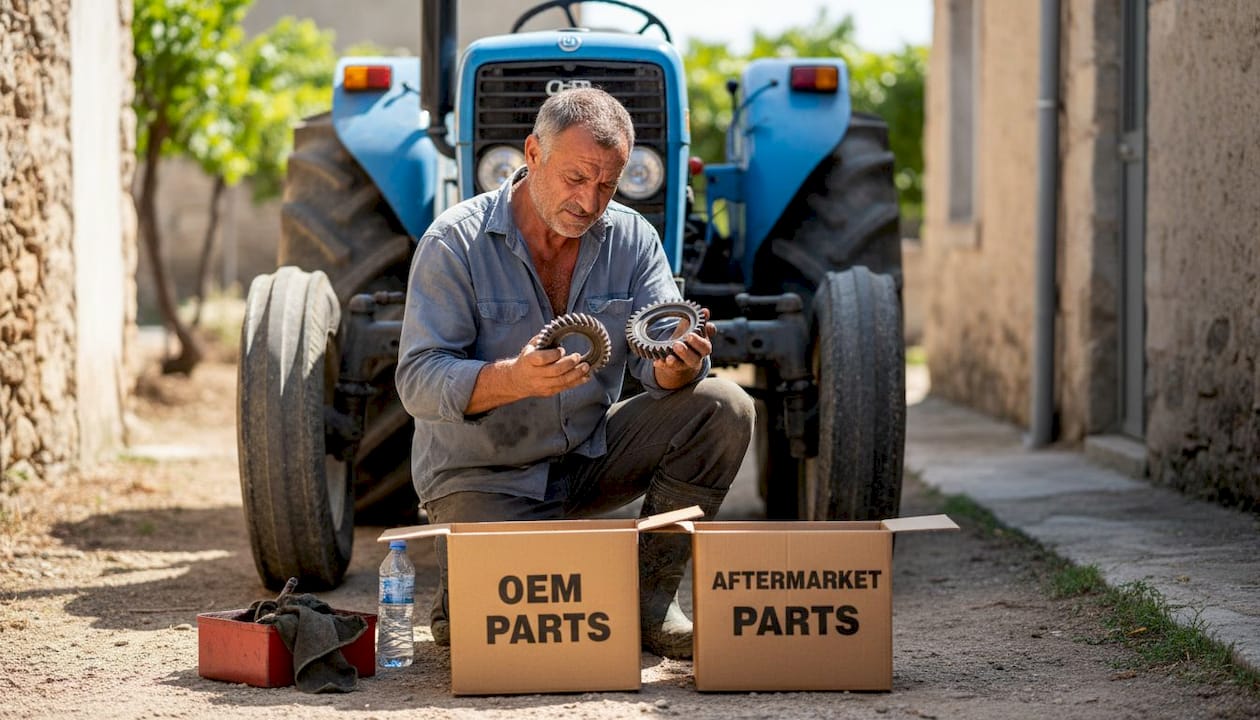
OEM stands for Original Equipment Manufacturer. OEM parts are made by or for the company that built your tractor, built to the exact specifications of the original component. Aftermarket parts are made by third-party manufacturers, often at a lower price point.
Here is how the two options compare on warranty and reliability:
| Factor | OEM parts | Aftermarket parts |
|---|---|---|
| Tractor warranty impact | Preserves full coverage | May void tractor warranty |
| Failure risk | Lower, built to spec | Higher variability |
| Price | Higher upfront | Lower upfront |
| Claim process | Straightforward | May be disputed |
Using OEM parts reduces failures by up to 25% and helps preserve your tractor’s overall warranty coverage. Non-OEM parts risk voiding that coverage entirely, which can turn a small repair into a major out-of-pocket expense.
Pro Tip: If your tractor is still under its original manufacturer warranty, always use OEM parts for any repair or replacement. One aftermarket part installed during the warranty period can give the manufacturer grounds to deny a much larger claim later.
This does not mean aftermarket parts are always wrong. For older machines where the original warranty has long expired, quality aftermarket parts from reputable suppliers can be a cost-effective choice. The key is knowing where your tractor stands in its warranty lifecycle before you decide. Learn more about OEM tractor parts benefits to make a fully informed call. You can also review Interzag’s warranty policy for guidance on how OEM requirements affect claim eligibility.
Limitations, exclusions, and claim process: What most people miss
Knowing your exclusions and the right claim steps can be the difference between a hassle-free repair and a costly mistake.
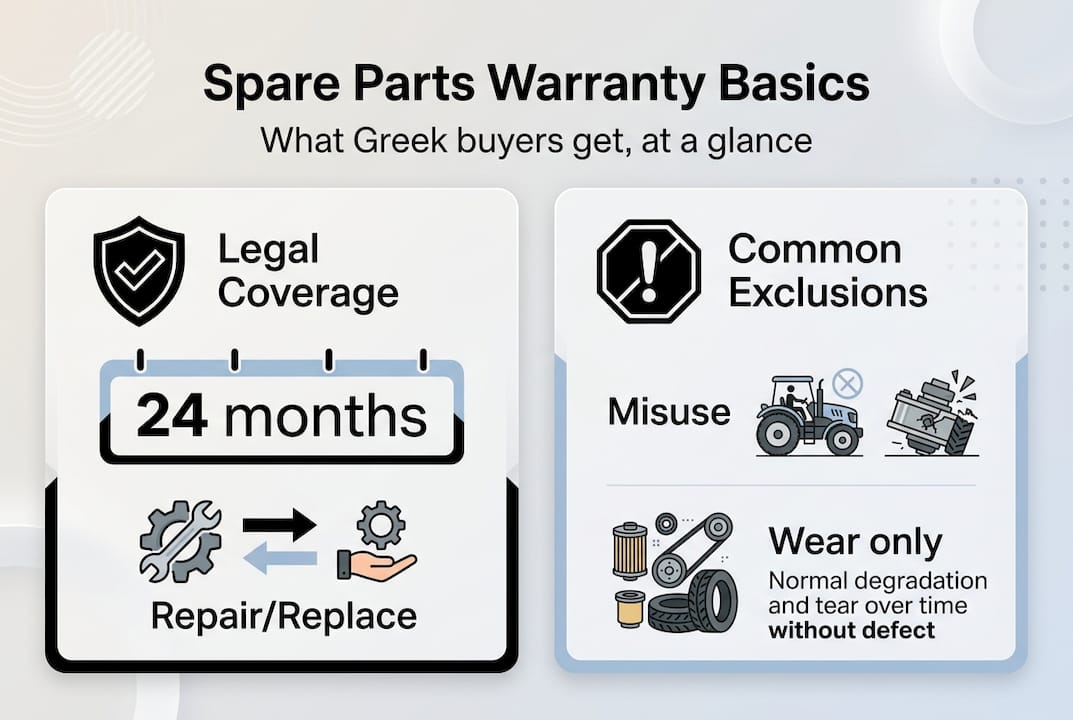
Most warranty rejections happen not because the supplier is acting in bad faith, but because the buyer did not follow the required process or the failure fell into an excluded category. Common exclusions include normal wear items like seals and filters, improper installation, unauthorized repairs, and physical damage from accidents or misuse. Customers also typically pay shipping costs when sending parts back for inspection.
Here are the most common exclusions to watch for:
- Wear parts: seals, gaskets, filters, belts, and brake pads
- Damage caused by incorrect installation or wrong torque settings
- Repairs performed by technicians not authorized by the supplier
- Parts modified or altered after purchase
- Damage from operating outside the manufacturer’s specified conditions
If you believe a part is genuinely defective, follow these steps to make a valid claim:
- Check the warranty terms on your invoice or the supplier’s website to confirm the defect is covered.
- Gather your documents: invoice, purchase date, photos of the defect, and any installation records.
- Contact the supplier directly by phone or email, describe the issue clearly, and ask for their claim procedure.
- Ship the part to the supplier or authorized service center as instructed. Keep your shipping receipt.
- Await the decision. The supplier will inspect the part and confirm whether the defect qualifies.
- Escalate if needed. If the supplier refuses a valid claim, Greek courts are a legitimate last resort, particularly in Thessaloniki and Kavala where agricultural disputes are common.
You can find more detail on the claims process for machinery parts to prepare before you ever need to file one.
Practical tips for maximizing your warranty protection
You have learned about policies and pitfalls. Now use these expert tips to protect your investment.
Warranty protection is not passive. It requires deliberate habits from the moment you purchase a part to the moment you install it and beyond. The farmers who get the most value from their warranties are the ones who treat documentation as seriously as they treat the machinery itself.
- Save every invoice. Store paper copies and digital photos of all receipts. Organize them by machine and date.
- Register new parts if required. Some suppliers require product registration to activate warranty coverage. Check immediately after purchase.
- Follow installation procedures exactly. Use the correct tools, torque settings, and procedures specified by the manufacturer. Deviations give suppliers grounds to deny claims.
- Use authorized service technicians whenever possible, especially for complex components like hydraulics or transmission parts.
- Review warranty terms before you buy, not after. Warranty periods vary from 12 to 24 months depending on brand and supplier, and exclusions differ widely.
- Document installations with photos. A timestamped photo of a correctly installed part is powerful evidence if a claim is disputed later.
Pro Tip: Create a simple folder on your phone for each major tractor component. Drop in a photo of the invoice, the installed part, and the warranty terms. It takes two minutes and can save hours of frustration later.
Understanding the difference between OEM vs aftermarket in repairs is also part of maximizing protection. The right part choice at purchase time prevents warranty headaches down the road.
Find the right parts and coverage for your machinery
Choosing the right spare part is not just about price. It is about knowing what protection comes with it, how long that protection lasts, and what you need to do to keep it valid. At pexlivanidis.com, we stock over 20,000 agricultural machinery parts and provide the product information you need to make confident decisions. Whether you are comparing OEM options or planning your next service, our guides on types of agricultural machinery parts and machinery maintenance best practices give you the context to buy smart. Free shipping within Greece on orders over 100€ means you can stock up without worrying about logistics. When warranty peace of mind matters, start with a trusted agricultural parts supplier that backs its inventory with real support.
Frequently asked questions
How long are tractor spare parts warranties in Greece?
Most suppliers offer between 12 and 24 months of warranty coverage, but Greek consumer law guarantees a minimum of 24 months for defects on consumer purchases regardless of what the supplier’s policy states.
What does a tractor spare part warranty not cover?
Warranties exclude normal wear, improper installation, unauthorized repairs, and damage from misuse. Consumable items like seals, filters, and belts are almost never covered under standard warranty terms.
Do OEM parts have better warranty protection than aftermarket parts?
Yes. OEM parts reduce failures by up to 25% and preserve your tractor’s full warranty, while aftermarket parts risk voiding coverage and may face more scrutiny during the claims process.
How do I make a warranty claim for a tractor spare part?
Gather your proof of purchase, contact the supplier with a clear description of the defect, and follow their specific claim procedure, which usually involves shipping the part back for inspection at your expense.