

Faulty tractor accessories can bring your farming operations to a halt, costing you both time and money during critical seasons. Spotting problems early makes the difference between a quick fix and expensive downtime. This guide walks you through practical methods to identify faulty accessories, enabling you to maintain peak performance and keep your equipment running smoothly throughout the year.
Table of Contents
- Understanding Tractor Accessories And Common Faults
- Preparing To Inspect Your Tractor Accessories: Tools And Safety
- Step By Step Methods To Identify Faulty Tractor Accessories
- Common Mistakes And Troubleshooting Tips When Diagnosing Accessory Faults
- What To Expect After Identifying Faulty Tractor Accessories
- Improve Your Tractor’s Performance With Expert Parts And Guidance
- Frequently Asked Questions
Key takeaways
| Point | Details |
|---|---|
| Regular inspections prevent major breakdowns | Monthly visual and functional checks catch early damage before it escalates into costly failures. |
| Systematic testing identifies specific faults | Hydraulic pressure tests, electrical continuity checks, and mechanical alignment reviews pinpoint exact issues. |
| Proper preparation ensures safety | Using correct tools and safety gear protects you during inspections and improves diagnostic accuracy. |
| Early detection reduces repair costs | Identifying faults quickly prevents cascading damage and extends the lifespan of your tractor accessories. |
Understanding tractor accessories and common faults
Tractor accessories are attachments that expand your machine’s capabilities beyond basic functions. They include hydraulic systems powering loaders and plows, PTO shafts driving implements, electrical components controlling lights and sensors, and hitch systems connecting various equipment. Various types of tractor accessories are crucial for farming tasks and can develop specific faults over time.
Each accessory type faces distinct failure modes based on its function and stress levels. Hydraulic systems suffer from seal deterioration and pressure loss. Electrical components experience wire corrosion and connection failures. Mechanical parts like PTO shafts develop wear patterns and alignment issues.
Common faults emerge from everyday agricultural use:
- Wear and tear from continuous operation and exposure to field conditions
- Fluid leaks in hydraulic lines caused by damaged seals or cracked hoses
- Electrical failures from moisture intrusion, corroded terminals, or damaged insulation
- Loose fittings that develop from vibration and thermal cycling during operation
- Bearing failures in rotating components from contamination or inadequate lubrication
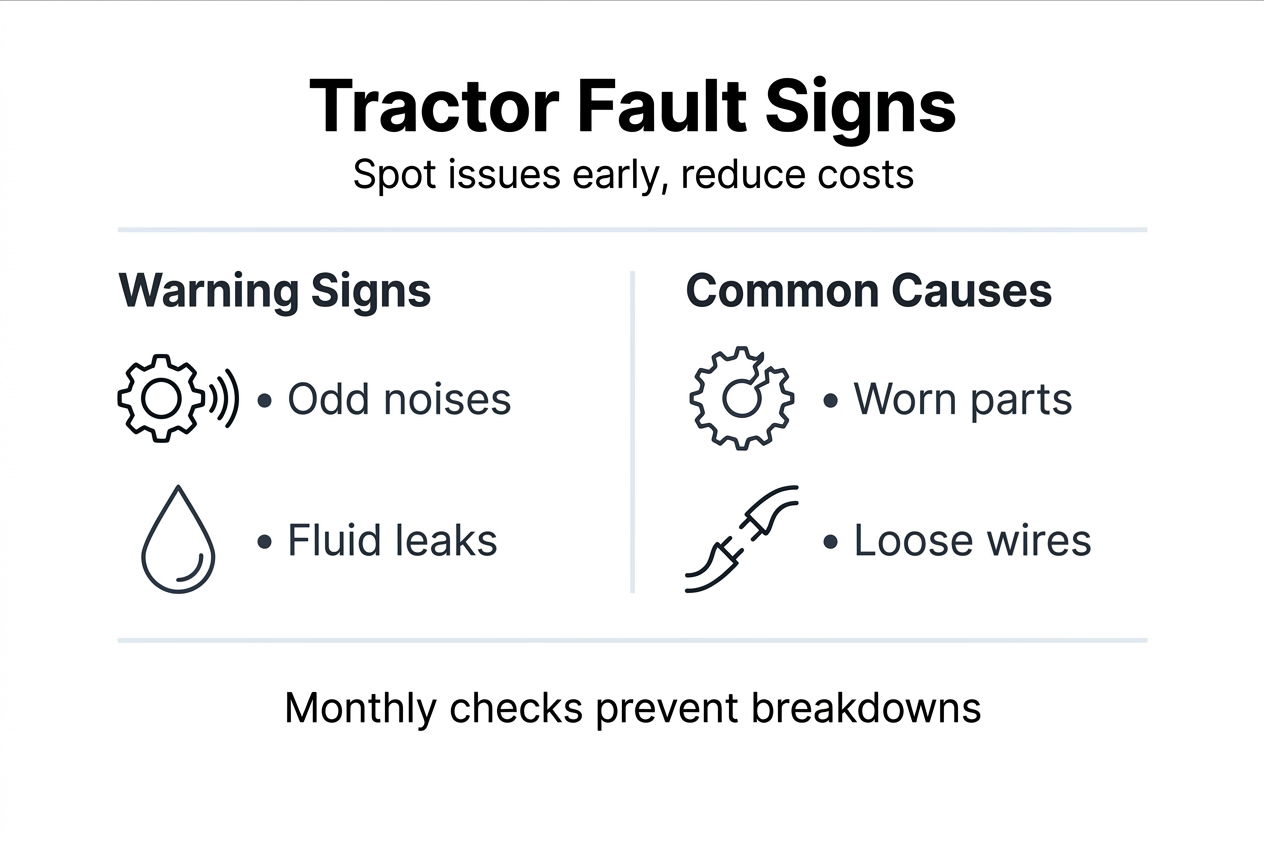
Recognizing early warning signs keeps minor issues from becoming major problems. Unusual grinding or squealing noises indicate bearing wear or misalignment. Reduced hydraulic performance signals pressure loss or contaminated fluid. Visible fluid pools beneath equipment point to seal failures. Flickering lights or intermittent electrical function suggest wiring problems or poor connections.
Preparing to inspect your tractor accessories: tools and safety
Successful fault identification starts with proper preparation and safety measures to prevent accidents during tractor accessory inspections. Gathering the right tools before you begin saves time and ensures thorough diagnosis.
Essential diagnostic tools include:
- Combination wrench set for checking connection tightness and removing covers
- Digital multimeter for testing electrical continuity and voltage levels
- High powered flashlight or headlamp for illuminating dark spaces and tight compartments
- Cleaning supplies including brushes and degreaser to expose hidden damage
- Hydraulic pressure gauge for testing system performance under load
- Inspection mirror for viewing hard to reach areas behind components
Safety equipment protects you during inspections. Wear heavy duty work gloves to shield hands from sharp edges and hot surfaces. Safety glasses prevent debris and fluid spray from reaching your eyes. Steel toed boots protect feet from dropped tools or equipment.
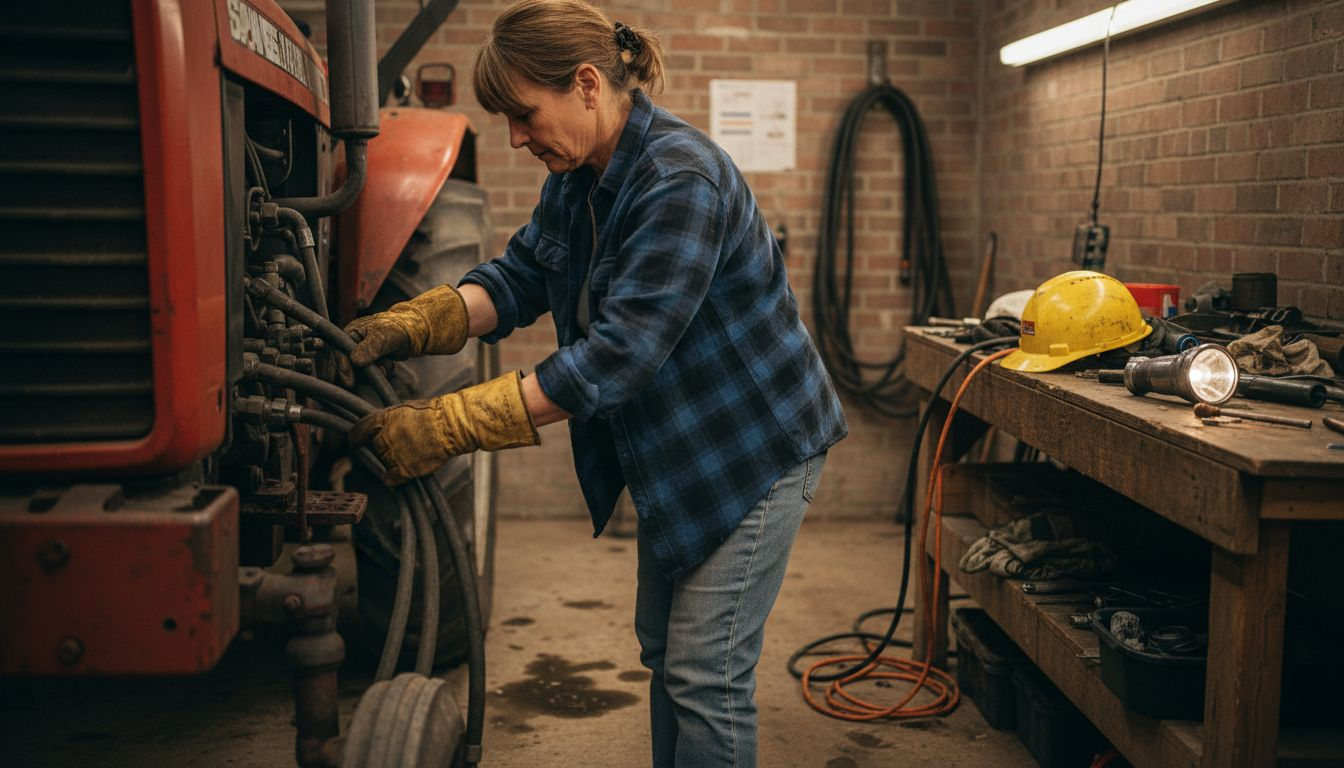
Secure your tractor properly before any inspection work. Park on level, firm ground to prevent rolling or tipping. Shut off the engine completely and remove the key. Disengage the PTO and lower all hydraulic implements to ground level. Apply the parking brake and place wheel chocks for extra security.
Clear your working area of unnecessary equipment and debris. Good workspace organization reduces tripping hazards and makes tools easily accessible. Adequate lighting helps you spot subtle damage that dim conditions might hide.
Pro Tip: Maintain a detailed logbook recording inspection dates, findings, and repairs performed to track accessory condition over time and identify recurring problems.
Step by step methods to identify faulty tractor accessories
With your workspace prepared, follow systematic step by step inspection and testing to detect faults early and effectively. This methodical approach ensures you examine every critical component.
- Begin with a comprehensive visual inspection walking completely around your tractor
- Check each accessory mounting point for looseness or missing hardware
- Examine all visible surfaces for cracks, corrosion, or deformation
- Look for fresh fluid leaks or dried residue indicating past seepage
- Inspect electrical wiring for exposed copper, cracked insulation, or discolored connections
- Document every finding with photos and notes for future reference
Hydraulic system testing reveals pressure and flow problems:
- Connect a pressure gauge to test ports on hydraulic cylinders
- Start the engine and cycle each hydraulic function through full range
- Compare actual pressure readings against manufacturer specifications
- Watch for slow response times indicating internal leakage
- Check all hoses by feeling for bulges or soft spots while pressurized
- Inspect connection points for seepage around fittings
Electrical component diagnosis identifies wiring and connection faults. Set your multimeter to continuity mode and test each circuit from power source to component. Check voltage at the battery terminals, then at each connection point along the circuit. Look for voltage drops exceeding 0.5 volts indicating resistance from corrosion or loose contacts.
PTO shaft examination catches mechanical wear before failure. Rotate the shaft by hand checking for rough spots or binding. Measure runout with a dial indicator to detect bent shafts. Inspect universal joints for play by attempting to move the yokes perpendicular to rotation. Check shield integrity and verify safety chains are intact.
This diagnostic table helps you match symptoms to likely faults:
| Symptom | Probable Cause | Priority |
|---|---|---|
| Hydraulic cylinder drift | Internal seal wear | High |
| Intermittent electrical function | Corroded connection | Medium |
| Grinding noise during PTO operation | Bearing failure | Critical |
| Slow hydraulic response | Low fluid level or pump wear | High |
| Visible fluid leaks | Damaged hose or seal | High |
For challenging diagnostics, understanding how to assemble tractor attachments helps you recognize proper versus faulty component interaction.
Pro Tip: Document all findings immediately and prioritize repairs based on safety risk and operational impact to prevent minor faults from causing cascading damage.
Common mistakes and troubleshooting tips when diagnosing accessory faults
Awareness of common mistakes improves diagnosis accuracy and reduces maintenance downtime. Many farmers overlook critical diagnostic steps that lead to incomplete repairs or recurring problems.
Frequent diagnostic errors include:
- Ignoring minor faults like small leaks or occasional noises until complete failure occurs
- Skipping safety procedures and inspecting energized electrical systems or pressurized hydraulics
- Assuming parts are good based on appearance without functional testing
- Replacing components without identifying root causes of failure
- Using incorrect torque specifications when reassembling accessories
- Failing to clean surfaces before inspection, missing cracks hidden by dirt
Effective troubleshooting starts with fundamentals. Always verify power supply voltage and quality before assuming component failure. Check that battery terminals are clean and tight. Confirm that fuses and circuit breakers are intact. Test at multiple points along electrical circuits to isolate fault locations.
Cross reference your observed symptoms against common fault patterns for each accessory type. Hydraulic systems with multiple failing seals often indicate contaminated fluid rather than coincidental seal failure. Electrical problems affecting multiple circuits suggest a ground fault rather than individual component issues.
Warning: Never inspect hydraulic systems under full pressure or probe electrical circuits with power connected. Release all pressure and disconnect power sources before detailed examination to prevent serious injury.
When diagnostic results seem contradictory, step back and verify your testing methods. Faulty test equipment gives misleading readings that send you down wrong paths. Confirm your multimeter reads correctly on known good circuits before trusting its results on suspect components.
What to expect after identifying faulty tractor accessories
Once you identify faulty accessories, deciding between repair and replacement determines your next steps. Timely identification and repair enhance tractor reliability and farming productivity. Severity and cost guide this decision.
Minor faults like loose connections, worn bushings, or damaged seals typically allow economical repair. Major damage including cracked housings, severely worn gears, or corroded electrical components usually require complete replacement. Consider the accessory’s age and overall condition. Older accessories near end of service life make poor repair candidates even for minor faults.
Ordering genuine parts ensures compatibility and longevity:
- Match part numbers exactly to your tractor make and model
- Verify specifications meet or exceed original equipment standards
- Source from reputable suppliers offering warranty coverage
- Order related wear items together to minimize future maintenance
- Keep commonly needed parts in inventory for quick repairs
Plan maintenance downtime strategically around your farming calendar. Schedule repairs during off seasons when tractor use is minimal. Prepare backup equipment or rental options for critical operations. Communicate timing with any hired help or contractors depending on your equipment.
Expect noticeable performance improvements after proper repairs. Hydraulic systems regain full power and speed. Electrical accessories function reliably without intermittent failures. Mechanical components operate quietly and smoothly. Your tractor becomes dependable again for demanding field work.
Regular inspection and maintenance cycles prevent fault recurrence. Monthly checks catch developing problems early. Annual comprehensive inspections by qualified technicians identify issues you might miss. Keeping detailed maintenance records helps predict when accessories need replacement based on actual wear patterns rather than guesswork.
Improve your tractor’s performance with expert parts and guidance
Maintaining your equipment becomes simpler when you have access to quality parts and expert knowledge. Pexlivanidis offers an extensive inventory of genuine tractor accessories tailored for Greek farming operations. Our comprehensive parts catalog includes hydraulic components, electrical systems, and mechanical accessories for all major tractor brands.
Beyond parts, we provide detailed maintenance resources covering inspection techniques, troubleshooting methods, and repair procedures. Our guides help you understand your equipment better and make informed decisions about maintenance timing and part selection. Free shipping on orders over 100€ within Greece means you get the parts you need quickly and economically. Visit our online shop to find exactly what your tractor needs to stay productive.
Frequently asked questions
How often should I inspect my tractor accessories for faults?
Conduct visual inspections monthly and before heavy seasonal use periods like planting or harvest. Include both visual checks for obvious damage and functional tests of hydraulic, electrical, and mechanical systems. Following structured preventative maintenance schedules reduces unexpected breakdowns and extends accessory life significantly.
What are the signs that a hydraulic attachment is faulty?
Watch for leaking hydraulic fluid around hoses, cylinders, or connection points. Sluggish or inconsistent response when operating hydraulic functions indicates internal wear or air contamination. Unusual noises like whining pumps or squealing cylinders signal pressure problems or mechanical damage requiring immediate attention.
Can I fix minor tractor accessory faults myself or should I call a professional?
Simple maintenance tasks like tightening loose bolts, replacing filters, or cleaning electrical connections are suitable for DIY repair with basic tools. Complex repairs involving hydraulic system rebuilds, electrical circuit diagnosis, or precision alignment work benefit from professional expertise. Review common repair methods to understand which tasks match your skill level.
How does early fault detection impact tractor maintenance costs?
Identifying problems early prevents minor issues from escalating into expensive major failures. A small hydraulic leak caught early requires only seal replacement, while ignored leaks lead to contaminated fluid damaging pumps and cylinders. Early detection typically reduces repair costs by 60 to 70 percent compared to emergency breakdown repairs. It also prevents secondary damage to connected components and minimizes operational downtime during critical farming periods.