

TL;DR:
- Local spare parts suppliers offer faster delivery, reducing downtime during critical farm periods.
- Building relationships with local suppliers provides tailored support, better availability, and proactive service.
- Considering total costs, local sourcing often proves more economical than cheaper imported parts when accounting for delays.
Every Greek farmer knows the feeling: your tractor breaks down mid-harvest, and the part you need is sitting in a warehouse three countries away. Waiting days or even weeks for a shipment is not just frustrating. It costs you real money, real yield, and real time you cannot get back. The good news is that local spare parts suppliers offer a smarter alternative that most operators overlook. This guide breaks down why sourcing parts locally matters, how to compare your options, and what steps you can take to build a supplier relationship that keeps your equipment running season after season.
Table of Contents
- Why local spare parts suppliers matter for Greek agriculture
- Top benefits local spare parts suppliers offer to farmers
- Local vs. non-local: Comparing costs, reliability, and support
- Best practices for working with local spare parts suppliers
- What most guides miss about local suppliers
- Reliable local suppliers: Your next step for sustainable farming
- Frequently asked questions
Key Takeaways
| Point | Details |
|---|---|
| Faster repairs | Local suppliers deliver parts quickly, minimizing tractor downtime on the farm. |
| Cost-effective choices | Working with local suppliers reduces hidden expenses like shipping and lost time. |
| Personalized service | Local experts understand the unique needs of Greek farmers and provide tailored support. |
| Stronger relationships | Collaborating with nearby suppliers leads to long-term trust and reliable service. |
Why local spare parts suppliers matter for Greek agriculture
Greek agriculture runs on tight seasonal windows. Olive harvest, wheat planting, cotton picking — each has a narrow timeframe where equipment failure is not just inconvenient, it is financially devastating. A single day of tractor downtime during peak season can mean losing thousands of euros in productivity. Yet many farmers still rely on distant suppliers, sometimes overseas, when local options are available.
Shipping times for imported parts often stretch beyond what suppliers initially promise. Customs delays, logistics bottlenecks, and simple miscommunication can turn a two-day estimate into a ten-day wait. That gap is where income disappears. Quality spare parts reduce downtime and operational losses, and the fastest way to access them is through a supplier who is already close to you.
Local suppliers also understand the specific machinery used across northern Greece, including the Thessaloniki plain, the Kavala region, and surrounding agricultural zones. They stock parts that match the tractors and implements common in those areas, not a generic catalog built for a global market.
Here is a quick comparison of what downtime looks like depending on your sourcing approach:
| Factor | Local supplier | Non-local or imported supplier |
|---|---|---|
| Average parts delivery time | Same day to 48 hours | 5 to 14 days |
| Downtime per incident | 1 to 2 days | 7 to 15 days |
| Communication ease | Direct, in-language | Often delayed or unclear |
| Part compatibility risk | Low | Moderate to high |
| Total repair cost impact | Lower | Often significantly higher |
Key disadvantages of relying on distant suppliers include:
- Unpredictable shipping timelines that disrupt farm planning
- Higher risk of receiving incompatible parts for regional tractor models
- Limited recourse if a part arrives damaged or incorrect
- No on-the-ground support for technical questions
The role of spare parts in keeping Greek farms productive cannot be overstated. When your supply chain is local, your ability to respond to equipment problems is faster, simpler, and far less stressful.
Top benefits local spare parts suppliers offer to farmers
Once you understand the context, the advantages of local sourcing become very concrete. This is not just about speed. It is about the full package of support that comes with a supplier who knows your region, your equipment, and your schedule.
Immediate access when it counts most. During harvest or planting, you cannot afford to wait. A local supplier can often have a critical part on your doorstep the same day you call. That kind of responsiveness is simply not possible with a supplier in another country.
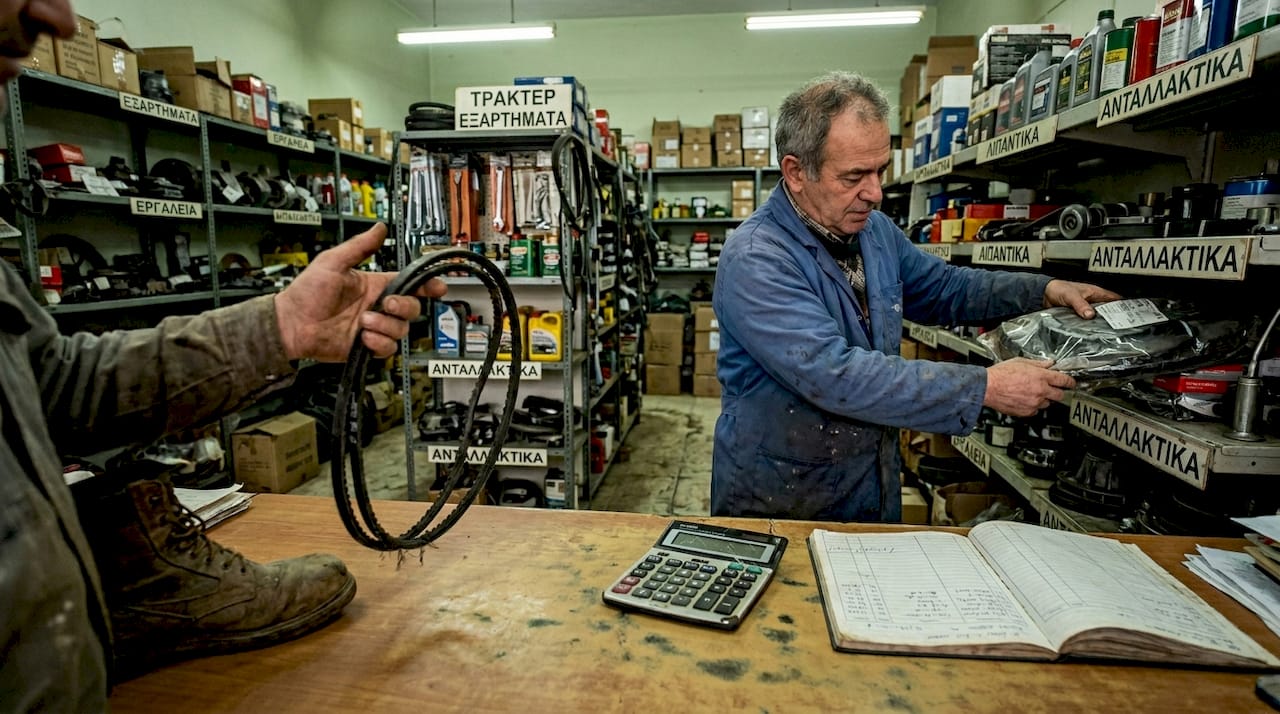
Personalized technical advice. Local experts know which parts fail most often in your climate and soil conditions. They can tell you whether a part is a good fit for your specific tractor model before you buy it. Local suppliers often provide faster, personalized service that results in reduced downtime, and that expertise is genuinely hard to replicate online.
Long-term relationship value. A supplier who knows your operation can flag new stock, alert you to recalls, and even set aside high-demand parts during busy seasons. That kind of proactive support only develops through an ongoing relationship.
- Faster part availability during critical farm operations
- Technical guidance tailored to your tractor brand and model
- Loyalty benefits and priority stock access over time
- Easier returns and warranty claims when issues arise
- Reduced risk of ordering the wrong part
Pro Tip: Call your local supplier at the start of each season and share your upcoming maintenance schedule. They can pre-order high-turnover parts for you and notify you when stock arrives, saving you from last-minute scrambles.
“I used to order parts online and wait two weeks every time something broke. Since I started working with a local supplier in Thessaloniki, my tractor is back in the field within a day. The savings in time alone have paid for the relationship several times over.”
When you invest in spare parts through a local channel, you are not just buying a component. You are buying reliability, speed, and a partner who understands what you need before you even ask. That is the kind of tractor reliability that makes a measurable difference across an entire growing season.
Local vs. non-local: Comparing costs, reliability, and support
A lot of farmers assume that buying from a distant supplier, especially one offering lower sticker prices, is the smarter financial move. That assumption rarely holds up when you factor in the full picture.
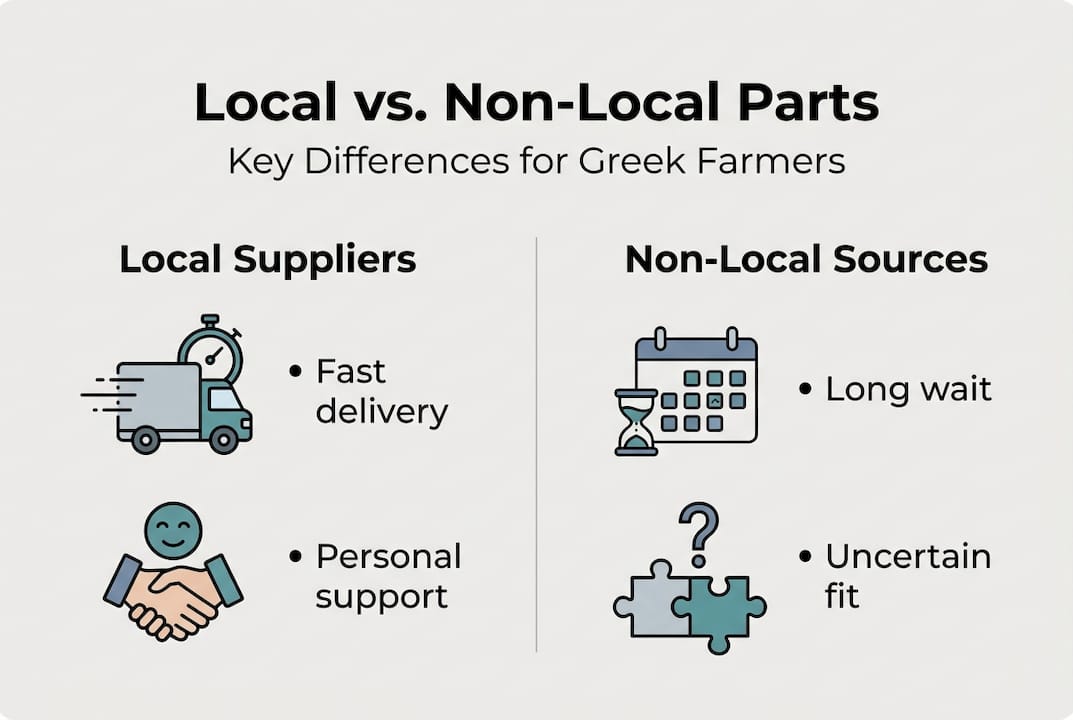
Shipping costs and waiting periods are often overlooked but can significantly impact total repair expenses. A part that costs 20 euros less from an overseas vendor can end up costing 300 euros more when you add express shipping, customs fees, and two weeks of lost productivity.
| Criteria | Local supplier | Non-local supplier |
|---|---|---|
| Base part price | Competitive | Sometimes lower |
| Shipping cost | Low or zero | Often significant |
| Delivery speed | 1 to 2 days | 5 to 14 days |
| Aftersales support | Strong and direct | Limited or slow |
| Part compatibility accuracy | High | Variable |
| Total cost of repair | Lower overall | Often higher overall |
Here is a step-by-step approach to evaluating any supplier before you commit:
- Ask for the full landed cost, including shipping and any import fees.
- Confirm the exact delivery timeline, not just the estimated one.
- Check whether the part carries a warranty and how claims are handled.
- Verify compatibility with your specific tractor make, model, and year.
- Ask for references from other farmers or operators in your area.
- Compare the total cost of downtime if the part is delayed or wrong.
Pro Tip: Before placing any order, ask your supplier directly about warranty coverage and part compatibility. A local supplier will usually walk you through this without hesitation. A distant one may give you a generic answer that leaves you exposed.
Using a solid parts sourcing guide can help you structure these decisions before peak season hits. And when it comes to choosing tractor parts, the right fit matters far more than the lowest price tag.
Best practices for working with local spare parts suppliers
Knowing that local suppliers are better is one thing. Building a relationship that actually delivers results takes a bit of intentional effort. Here is how to get the most from your local sourcing strategy.
Start by identifying reputable suppliers in your area. Look for businesses with a physical location, a clear product catalog, and a track record with other farmers. Ask your neighbors or fellow operators who they trust. Word of mouth is still one of the most reliable filters in agricultural communities.
Ongoing supplier relationships can streamline sourcing and help farmers keep equipment in optimal condition. That means regular communication, not just calls when something breaks. Check in at the start of each season, share your equipment list, and ask what new stock has arrived.
Keep a running list of your high-turnover consumables. These are the parts that wear out predictably and should always be on hand:
- Air, oil, and fuel filters
- Belts and drive chains
- Hydraulic seals and hoses
- Spark plugs and glow plugs
- Brake pads and clutch components
- Tires and inner tubes for field equipment
Here is a practical step-by-step guide to building a strong supplier relationship:
- Visit the supplier in person at least once to establish a face-to-face connection.
- Provide a list of your tractors and implements so they can anticipate your needs.
- Set up a B2B or wholesale account if you order frequently, which often unlocks better pricing.
- Ask to be added to any notification system for new stock or recalled parts.
- Pay on time and communicate clearly. Reliable customers get better service.
- Review your parts usage at the end of each season and plan ahead for the next.
A good spare parts distributor is not just a vendor. They are a working partner in your farm’s operational health. Treating that relationship as a genuine investment in spare parts pays off in fewer breakdowns and faster recoveries when problems do occur.
What most guides miss about local suppliers
Most articles on spare parts sourcing focus on price and delivery speed. Those matter, but they miss the deeper value that a strong local relationship actually provides over time.
Here is what we have seen repeatedly: farmers who build genuine relationships with local suppliers experience fewer breakdowns overall. Not because the parts are magically better, but because the supplier starts proactively flagging potential issues, notifying them about upgraded components, and even adjusting their own inventory based on what their customers actually need. That kind of adaptive service does not show up in a price comparison table.
There is also the matter of trust. When a part fails unexpectedly, a local supplier who knows you will go out of their way to find a solution fast. A distant vendor will process a ticket.
A solid long-term spare parts strategy is not built on finding the cheapest part each time. It is built on knowing exactly who to call, and knowing they will answer. That is the real competitive advantage that most guides never mention.
Reliable local suppliers: Your next step for sustainable farming
The evidence is clear: local spare parts suppliers give Greek farmers a genuine operational edge. Faster access, better support, lower total costs, and a relationship that grows more valuable with every season. These are not small advantages. They are the difference between a farm that runs smoothly and one that loses days to unnecessary delays.
At pexlivanidis.com, you will find over 20,000 agricultural parts with free shipping across Greece on orders over 100 euros. Whether you are looking for guidance on essential machinery parts or need a complete machinery maintenance guide, the resources are ready for you. Take the first step toward a smarter, more resilient parts strategy today.
Frequently asked questions
How do local spare parts suppliers reduce tractor downtime?
Fast local access minimizes machinery downtime by delivering parts within hours rather than days, so repairs happen quickly and field disruption stays minimal.
Are local spare parts more expensive than imported ones?
Local parts may have a slightly higher sticker price, but hidden costs in delays and shipping typically make imported options more expensive when you calculate the full repair cost.
How can I spot a trustworthy local supplier?
Look for clear warranty policies, a broad stock range, and referrals from nearby farmers. Customer relationships and reliability are strong indicators of a supplier worth trusting.
What if a local supplier doesn’t stock a rare tractor part?
A good local supplier can usually place a special order quickly or point you toward a compatible alternative, which is far faster than sourcing independently from overseas.