

Over 50% of tractors in Greece are more than 25 years old, and only 5% of farms have adopted precision agriculture despite €240 million in modernization investments earmarked for 2025. That gap between available funding and actual adoption tells a story every Greek farmer knows firsthand: the pressure to modernize is real, but the path forward is not always clear. This article breaks down the most important global and local agri machinery trends, gives you a practical framework for evaluating upgrades, and shows you how to move forward without overextending your budget.
Table of Contents
- How to evaluate agri machinery upgrades
- Global trends shaping agri machinery in 2025
- Spotlight: Key machinery categories and their upgrades
- Greek market realities: Adoption, challenges, and funding
- Comparison table: Approaches to upgrading agri machinery
- Boost your farm’s productivity with expert agri machinery upgrades
- Frequently asked questions
Key Takeaways
| Point | Details |
|---|---|
| Upgrade criteria checklist | Evaluate machinery by age, technology readiness, and funding options before investing. |
| Adopt global trends | Automation and precision tech offer productivity gains and are becoming standard worldwide. |
| Greek market challenges | Older equipment and limited training make modernization harder but subsidies and retrofits help. |
| Smart upgrade pathways | Compare buying, retrofitting, and renting to minimize cost and maximize returns. |
| Actionable resources | Leverage expert guides and local support to make your upgrade plan practical and efficient. |
How to evaluate agri machinery upgrades
Choosing the right upgrade starts with an honest look at what you already have. If your tractor is more than 20 years old, it likely lacks the hydraulic capacity, electronic control systems, or fuel efficiency needed to support modern attachments. Age alone is not the only factor, but it is a strong starting signal.
Here is a step-by-step approach to evaluating whether an upgrade makes sense for your operation:
- Assess your current fleet age and condition. Machines older than 15 to 20 years often cost more to maintain than they save in productivity.
- Check compatibility with precision tools. GPS guidance, variable rate application, and ISOBUS connectivity require specific hardware. Not all older machines can support these.
- Review available funding. EU subsidies and national programs are active in Greece, but funding and training gaps continue to slow adoption. Check eligibility before committing to a purchase.
- Calculate the productivity return. The global agri machinery market is projected to reach $202 billion in 2026, driven by multi-functional machines that deliver measurable output gains. Use that benchmark to set realistic expectations.
- Explore the 2025 agri machinery guide for a detailed breakdown of what modern machines offer Greek farms.
Pro Tip: Before buying new, look into retrofit kits. These bolt-on upgrades add GPS guidance, digital monitoring, or improved hydraulics to existing machines at a fraction of the cost of a full replacement. For many Greek farms, this is the smartest first move. You can find practical machinery upgrade tips to help you decide which retrofit options fit your setup.
Global trends shaping agri machinery in 2025
Once you know what to look for, here is what is driving global agri machinery trends right now. The numbers are striking.
Global AgTech machinery sales are projected to exceed $55 billion in 2025, with the precision farming segment alone surpassing $15 billion. These are not niche figures. They reflect a fundamental shift in how farming is done worldwide.
Key trends to watch:
- Automation and robotics: Robotics adoption sits at 13% globally, but farms using these systems report an average 15% productivity gain. That is a significant return for operations of any size.
- Precision farming growth: Precision ag is growing at 12% CAGR worldwide. Soil sensors, drone mapping, and variable rate seeding are no longer experimental. They are standard tools in competitive markets.
- Alternative fuels and electrification: Hybrid and electric tractors are entering the market in larger numbers. Hydrogen fuel cell prototypes are also advancing. These options reduce operating costs over time and align with EU emissions targets.
- Multi-functional and rental machinery: Farmers are increasingly choosing machines that handle multiple tasks or renting equipment to test new technology before committing to a purchase.
For a broader view of how these shifts connect, the global machinery guide covers the full landscape in practical terms.
Spotlight: Key machinery categories and their upgrades
To make these trends actionable, here is what is new for each major machinery category.
Tractors are seeing the most rapid change. Tractor trends now include alternative fuels, full electrification options, and digital control systems like ISOBUS, which allows implements and tractors to communicate automatically. This reduces operator error and improves efficiency across tasks.
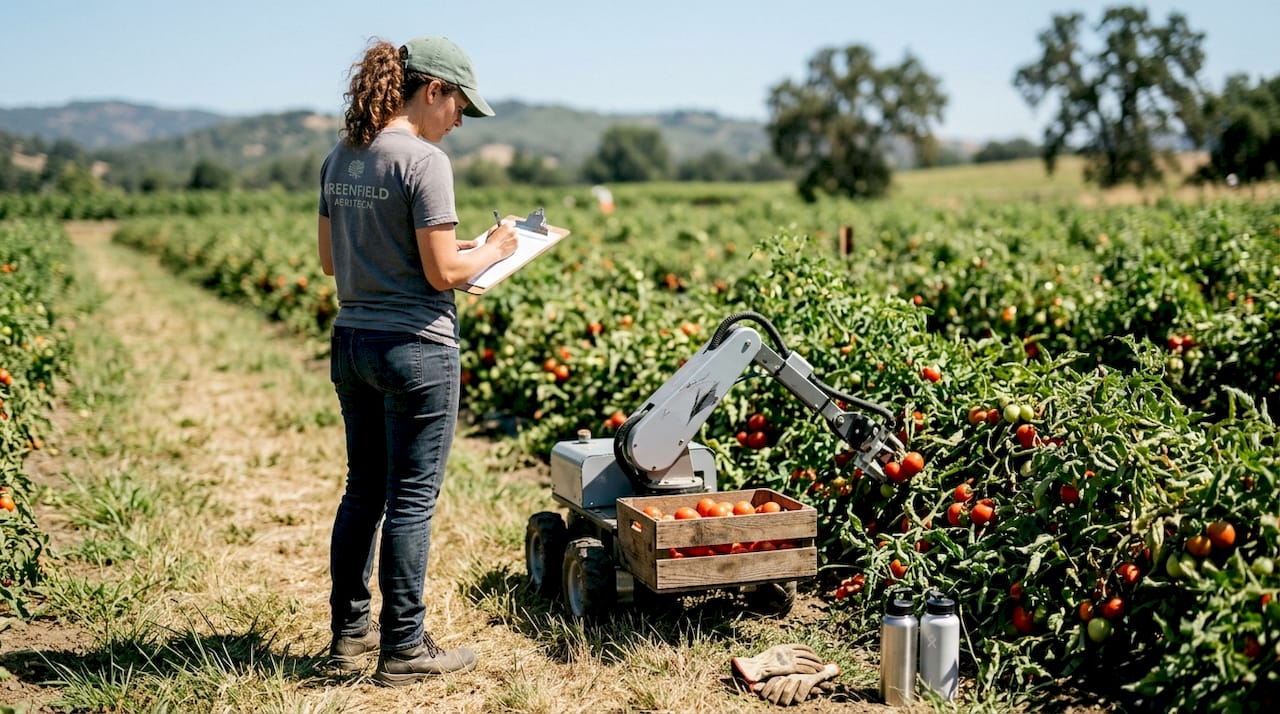
Harvesters are integrating robotics for selective picking, particularly in fruit and vegetable crops. Early adopters in Southern Europe report fewer labor shortages and more consistent harvest quality.
Sprayers and seeders are benefiting from digital control systems that adjust application rates in real time based on field data. This cuts input costs and reduces chemical runoff, which matters both for your bottom line and for compliance with EU environmental standards.
Key upgrade features worth prioritizing:
- ISOBUS compatibility for seamless implement control
- GPS auto-steer for reduced overlap and fuel savings
- Variable rate technology for fertilizer and pesticide application
- Telematics for remote monitoring and predictive maintenance
Pro Tip: If you are unsure whether a new technology fits your operation, rent before you buy. Many dealers in Greece now offer short-term rental agreements on precision equipment. Use the upgrade checklist to map out which features matter most for your crops, and review the precision farming guide to understand what each tool actually does in the field.
Greek market realities: Adoption, challenges, and funding
Now, let us see how these innovations fit with what is actually happening in Greece.
Greece has over 160,000 active tractors with an average age of 23 years. Only 5% of farms use precision agriculture tools. That is a stark contrast to the EU average, where adoption rates are significantly higher and fleet ages are lower.
| Metric | Greece | EU average |
|---|---|---|
| Average tractor age | 23 years | 12 to 15 years |
| Precision ag adoption | 5% | 20 to 30% |
| Digital training access | 6.7% | 25%+ |
| Modernization investment (2025) | €240M | Varies by country |
The funding is there. The challenge is access and awareness. Many farmers qualify for EU co-funded programs but lack the guidance to apply. Local agricultural cooperatives and regional development offices are useful starting points.
“Starting small with a single precision tool, like a GPS guidance system on an existing tractor, often delivers faster returns than waiting for a full fleet replacement. The data you collect in year one shapes every decision after that.”
New tractors combined with precision upgrades can deliver up to a 10% yield boost. For a mid-sized Greek farm, that translates to real income. The key is not waiting for the perfect moment. It is starting with one proven tool and building from there.
For more on how precision agriculture applies specifically to Greek conditions, the precision ag in Greece resource is worth reading. You can also explore telematics farming insights to understand how remote monitoring fits into a practical upgrade plan.
Comparison table: Approaches to upgrading agri machinery
To help you choose, here is a side-by-side look at the three main upgrade paths available to Greek farmers.
| Approach | Cost | Risk | Flexibility | Local fit |
|---|---|---|---|---|
| Buy new | High upfront | Low long-term | Low (committed) | Best for large farms with subsidy access |
| Retrofit existing | Low to medium | Low | High | Strong fit for most Greek farms |
| Rent or lease | Pay per use | Very low | Very high | Ideal for testing new tech |
Rental machinery is increasingly preferred globally as a way to test technology and manage costs without large capital commitments. For Greek farms with limited cash flow or uncertain subsidy timelines, this approach removes a lot of financial risk.
Retrofit kits are expert-recommended as a cost-effective step for farms that are not ready for full replacement. They extend the useful life of existing machines while adding modern functionality. The recommendation is consistent: start small, prove the value, then scale.
For a deeper look at how smart farming tools fit into each of these paths, the smart farming guide walks through real-world applications in plain language.
Boost your farm’s productivity with expert agri machinery upgrades
If you are ready to take action, the right information makes all the difference. At pexlivanidis.com, we support Greek farmers with practical resources and a catalog of over 20,000 spare parts and tractor accessories, with free shipping across Greece on orders over 100€. Whether you are retrofitting an older machine or maintaining a newer one, our machinery upgrade tips give you a clear starting point. Explore our machinery parts explained guide to understand which components matter most, and use our machinery maintenance guide to keep your equipment running at peak performance through every season.
Frequently asked questions
What are the top agri machinery trends for 2025?
Automation and precision farming dominate 2025 machinery trends, alongside alternative fuels, robotics, and multi-functional machines designed to handle multiple tasks efficiently.
Why is Greece lagging in agri machinery adoption?
Only 6.7% of Greek farmers have access to digital training, and the fleet skews older, but EU funding programs and affordable retrofit kits are actively helping close that gap.
How can farmers upgrade agri machinery cost-effectively?
Retrofit kits and rentals are the most practical starting points, letting you add modern functionality to existing machines or test new technology without a large upfront investment.
What impact do precision upgrades have on yields?
Precision upgrades combined with newer tractors can deliver up to a 10% yield improvement, which for most Greek farms represents a meaningful and measurable income gain.