

TL;DR:
- Greek farms mainly operate with outdated machinery over 25 years old.
- EU policies, labor shortages, and climate challenges are driving adoption of modern precision agriculture tools.
- Collective action, training, and targeted investments can unlock substantial productivity and environmental benefits.
Greek farms are at a crossroads. Most operators manage plots with tractors more than 25 years old, while EU policy, labor shortages, and intensifying climate stress are pushing mechanization in a new direction fast. Over 50% of Greece’s tractor fleet is older than a quarter century, meaning a large share of farmers are working with machines that were designed for a completely different era of agriculture. This article walks you through the key forces reshaping mechanization, the technologies gaining traction, the real obstacles standing in your way, and the practical steps you can take now to position your operation for better yields, lower costs, and long-term resilience.
Table of Contents
- Key drivers shaping new mechanization trends
- Modern mechanization options: Precision ag, automation, and digital tools
- Barriers to adoption: What holds Greek farmers back?
- Smart strategies: How Greek farmers can align with changing trends
- A fresh take: Why slow adoption may be masking future potential
- Ready to upgrade your machinery? Resources for your next step
- Frequently asked questions
Key Takeaways
| Point | Details |
|---|---|
| Modernization drivers | EU policies, imports, and cost pressures accelerate new mechanization trends in Greek farming. |
| Precision ag benefits | Precision technology can raise profits, lower costs, and cut emissions when adopted strategically. |
| Barriers persist | Skills gaps, aged equipment, and small fragmented farms still slow Greece’s modernization. |
| Smart upgrades matter | Phased investments, digital training, and collective action help farmers adapt effectively. |
| Future opportunity | Early adopters who combine technology and cooperation can outpace their peers and boost farm resilience. |
Key drivers shaping new mechanization trends
The push for modernization isn’t coming from one direction. It is the result of several forces hitting at once, and understanding them helps you make smarter decisions about where to invest.
EU policy and subsidies are the biggest levers. Greece’s participation in the Common Agricultural Policy (CAP) means access to serious funding. EU CAP and Greek Improvement Plans allocated approximately €240 million in direct payments and €450 million in agricultural investments in 2025 alone, with precision agriculture, automation, digitization, and irrigation modernization all listed as eligible priorities. If you have not explored what your regional agriculture office currently offers, you are likely leaving money on the table.
Tractor imports are climbing again. After years of stagnation, the Greek tractor market is rising in 2026 following a measurable surge in imports. This signals that more operators are actively replacing or supplementing aged equipment, not just repairing it. It also means the second-hand market for well-maintained used machinery with modern electronics is becoming more competitive.
Labor is getting harder to find and more expensive. Seasonal worker shortages are a real operational constraint across Greek regions, particularly in Thessaloniki, Kavala, and Macedonia. Mechanization is not just about productivity. In many cases, it is the only realistic way to get the harvest in on time.
Here is a summary of the main forces and their practical effects:
| Driver | Practical effect on farms |
|---|---|
| CAP subsidies and eco-schemes | Funding for machinery upgrades, precision tools |
| Labor shortages | Pressure to automate repetitive tasks |
| Climate variability | Need for adaptive irrigation and soil sensors |
| Market competitiveness | Lower costs required to stay viable |
| Rising import volume | More machinery options at varied price points |
Checking your eligibility for an equipment upgrade checklist before the next CAP application cycle could save you significant time and help you prioritize correctly. And if you want to understand how digital tools tie into profitability, a closer look at precision agriculture benefits is a good place to start.
Modern mechanization options: Precision ag, automation, and digital tools
With the drivers clear, it is worth getting specific about what modern mechanization actually looks like in practice and what the numbers say about its impact.
The core technologies that are moving from pilot to mainstream include:
- GPS-guided tractors that reduce overlap and input waste during planting and spraying
- Variable Rate Technology (VRT), which adjusts fertilizer or water application in real time based on field data
- Field sensors and soil moisture monitors that remove guesswork from irrigation decisions
- Drones and UAVs for crop scouting, canopy analysis, and targeted spraying
- Telematics platforms that track fuel use, engine hours, and maintenance schedules remotely
The financial case is strong. Precision-compatible tractors have been shown to deliver a 10% revenue increase, an 18% reduction in operating costs, and a 41% rise in net income according to IOBE research. That is not a marginal gain. For a mid-sized grain or vegetable operation, those numbers represent a genuine shift in viability.
The environmental case is equally compelling. Technology-driven productivity could reduce agricultural greenhouse gas emissions by 29% by 2030 and as much as 62% by 2050 compared to business-as-usual, while production costs drop by nearly 50%. This matters practically because the next round of CAP eco-scheme compliance will likely reward farms that can demonstrate lower emission intensity.
Here is a direct comparison to help you see the gap between traditional and modern approaches:
| Category | Traditional machinery | Modern precision machinery |
|---|---|---|
| Fertilizer use | Blanket application, fixed rates | VRT-adjusted, field-specific rates |
| Fuel efficiency | High consumption per hectare | Up to 18% lower operating costs |
| Data visibility | None or manual logs | Real-time telematics and reporting |
| Labor intensity | High, especially for spraying | Reduced through automation |
| CAP compliance | Basic | Supports eco-scheme documentation |
A concrete example worth knowing: the PreFer precision fertilization service, applied in Greek rice fields, produced 8.4% higher yields with up to 20% less fertilizer use and over 30% greater profitability per season. That kind of result does not require a full fleet replacement. It required adopting a specific service and the right compatible equipment.
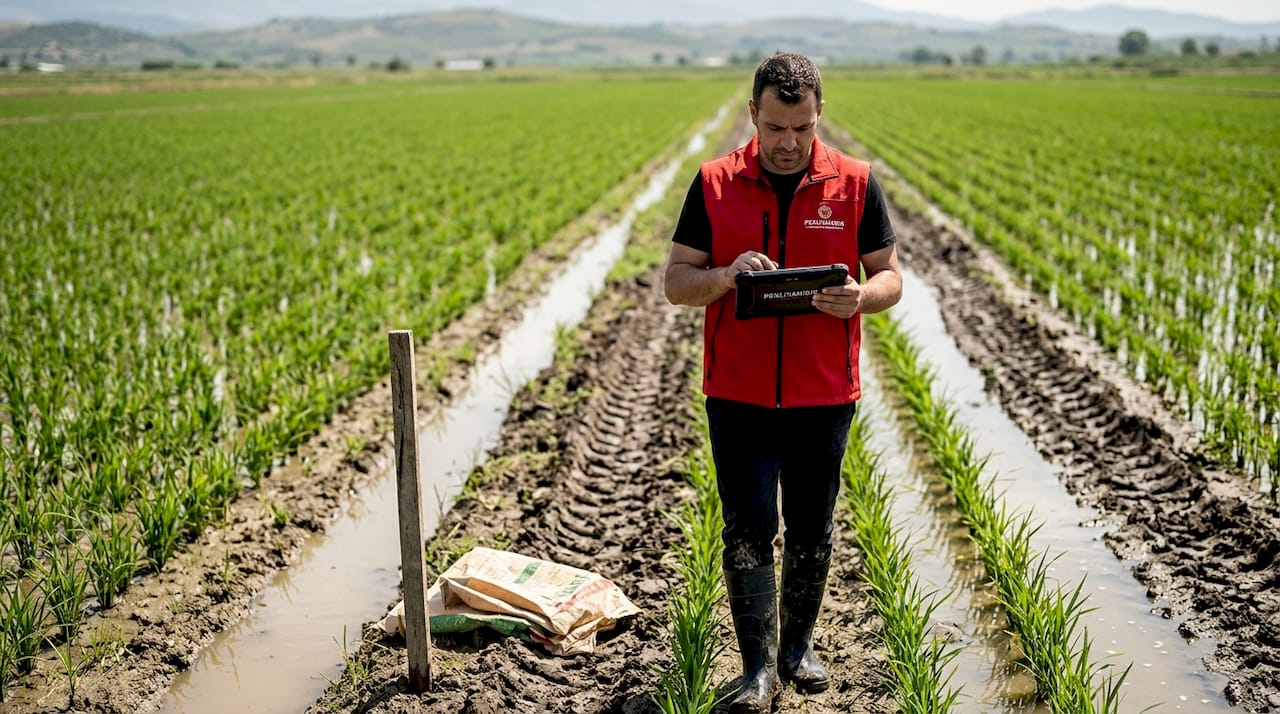
Pro Tip: You do not need to adopt every technology at once. Start with one data-driven tool, like a soil moisture sensor linked to your irrigation system, and measure the result before expanding. This phased approach keeps capital risk manageable while building your team’s practical confidence.
Adoption is still low though. Roughly 5% of Greek farms currently use any form of precision agriculture. The gap between what is possible and what is practiced is enormous, and that gap is exactly where opportunity lives for operators willing to move first. Understanding what a precision farming guide looks like in Greek conditions or how using sensors in agriculture works at the field level can help you evaluate the right entry points.
Barriers to adoption: What holds Greek farmers back?
Knowing the potential is one thing. Understanding why so few farms have captured it yet is equally important. The barriers are real, and ignoring them leads to bad investment decisions.
The training deficit is serious. Only 6.7% of Greek farmers have received any formal training in new agricultural technology. The remaining 94.1% rely primarily on personal experience and word of mouth. This is not a criticism. It reflects decades of underinvestment in agricultural extension services. But it does mean that most operators evaluating a GPS tractor or a VRT sprayer are doing so without a solid framework for comparing options.
Land fragmentation limits ROI on large equipment. The average Greek farm plot is among the smallest in Europe. When your workable area is split across multiple non-contiguous parcels, the economics of a large precision combine or a full telematics-equipped tractor fleet shift dramatically. Small farm sizes and fragmented land are consistently identified as primary constraints alongside an aging farmer workforce and slow administrative processes.
Bureaucracy slows the modernization pipeline. Grant applications, equipment certifications, and CAP scheme registrations often take months. By the time funding is approved, planting season is underway and equipment lead times may have shifted. This cycle discourages investment even among operators who want to modernize.
“The farmers who struggle most are not those who lack ambition. They are those who lack access to the right training, the right networks, and the right administrative support at the right time.” This observation from agricultural development researchers captures a structural challenge that no single piece of equipment solves on its own.
The main barriers summarized:
- No formal tech training for over 90% of operators
- Small and fragmented plot sizes that limit machine utilization
- Aging farmer population with less digital comfort
- Slow grant and subsidy disbursement
- High upfront costs for precision equipment relative to farm revenue
Pro Tip: Regional agricultural cooperatives in Greece have successfully implemented shared machinery pools that give individual small farms access to GPS-guided equipment without the full capital outlay. If your village or region has an active cooperative, ask specifically about machinery sharing agreements before buying independently. The savings can be substantial, and the operational learning curve is shared across members.
For farms ready to take the first digital step, reviewing telematics optimization tips or getting a broader view through a smart farming overview will help frame which technologies fit your current operation size and budget.
Smart strategies: How Greek farmers can align with changing trends
Barriers are real, but they are not permanent. Here is a practical sequence of steps that fits the actual conditions of Greek agriculture in 2026.
- Assess your current fleet honestly. List every machine, its age, its maintenance history, and its current reliability. Machines older than 20 years may cost more in repairs and downtime than a subsidized upgrade would cost over five years.
- Map the available subsidies before spending anything. Contact your regional agriculture directorate or an agricultural consultant and identify every CAP measure, national improvement plan, or eco-scheme you currently qualify for. Timing your investment to align with open application windows matters significantly.
- Prioritize training first, equipment second. Even a basic two-day course in precision agriculture fundamentals will sharpen your ability to evaluate equipment claims from dealers and make better use of whatever tools you adopt.
- Start with targeted precision services rather than full equipment replacement. The PreFer example from Greek rice cultivation is instructive. 8.4% higher yields came from using a precision fertilization service, not necessarily owning the entire precision stack. Service-based precision agriculture reduces your capital exposure while delivering measurable results.
- For steep terrain or fragmented plots, evaluate drones and UAVs first. A drone capable of targeted spraying costs far less than a specialized hillside tractor and can be shared between neighboring farms relatively easily.
- Use digital record-keeping from day one. Whether or not you adopt precision machinery, maintaining digital field records (inputs, yields, weather events, machine hours) makes future grant applications far stronger and helps you identify patterns that improve decisions.
Here are typical results from precision agriculture pilot projects in Mediterranean-climate farming contexts:
| Metric | Conventional approach | Precision pilot result |
|---|---|---|
| Fertilizer use | Baseline | Reduced by up to 20% |
| Crop yield | Baseline | Increased by 8 to 10% |
| Net profitability | Baseline | Improved by 30 to 41% |
| GHG intensity | Baseline | Reduced by up to 29% |
| Machine fuel use | Baseline | Reduced by 15 to 18% |
When preparing for the next CAP programming cycle, document every precision practice, digital record, and eco-scheme-compliant activity you perform. These records are your evidence base for accessing higher-tier support. Returning to the equipment upgrade checklist periodically as programs evolve helps you stay aligned with what funding bodies are actually rewarding.
A fresh take: Why slow adoption may be masking future potential
Here is the view most articles skip over. Greece’s low mechanization adoption rate looks like a liability from the outside. But from an operational standpoint, it may actually represent a latent leap forward waiting to happen.
Here is why. Countries and sectors that fall behind in technology adoption and then receive a strong policy and economic push often “leapfrog” intermediate technology stages. Instead of going from manual to early automation to basic precision farming sequentially, Greek operators who start fresh today can move directly to GPS-guided, sensor-integrated, telematics-tracked machinery. They skip the expensive intermediate steps that early adopters in northern Europe paid for decades ago.
The numbers reveal a troubling but honest baseline. New machinery boosts income by 41% and precision services add 30% profitability, yet Greece’s agricultural labor productivity fell by 8.8% in 2025 while the EU average grew by 9.2%. That gap is painful. But it also signals that even modest, well-targeted upgrades in Greece will generate outsized returns compared to countries where productivity is already near its ceiling.
The real unlock is not a single tractor or sensor system. It is collective action. Farmers who organize into learning networks, share equipment access, pool grant applications, and train together will close the digital skills gap faster than any individual farm working alone. A group of eight to ten farms in the same commune, sharing one GPS-guided tractor and one trained operator, achieves better utilization than eight individual farms each trying to justify a standalone purchase.
Eco-compliance adds a second dividend on top of the productivity gain. Farms that can demonstrate lower fertilizer use, reduced emissions, and better water management are not just more profitable. They are better positioned for future CAP support tiers, premium market access, and sustainability-linked supply chain contracts. The smart farming potential is real, but it is captured fastest by farms that treat it as a collective infrastructure problem rather than an individual purchasing decision.
Ready to upgrade your machinery? Resources for your next step
If this article has helped clarify where you stand and where you want to go, the next move is practical. Before spending on any new machine or part, it helps to understand your options in depth. Our guide to types of agricultural machinery parts breaks down what matters most across tractor systems, so you can evaluate upgrades without relying solely on a dealer’s recommendation. If you already know your fleet needs work, the machinery upgrade tips resource covers the key decisions in priority order. And when you are ready to buy, the buying machinery tips guide will help you avoid the most costly mistakes Greek operators make during equipment procurement.
Frequently asked questions
How does precision agriculture improve farm profitability in Greece?
Precision ag tools can raise net income by 41%, cut operating costs significantly, and targeted services like precision fertilization have delivered over 30% profitability improvements in Greek field trials.
What are the biggest obstacles to mechanization for Greek farms?
Small farm sizes, fragmented land, an aging workforce, and bureaucratic delays are the primary barriers, compounded by very low formal training rates among active farmers.
Are there grants or subsidies available for upgrading farm machinery in Greece?
Yes. EU CAP and national improvement plans provide hundreds of millions in targeted funding for machinery, automation, precision agriculture, and irrigation modernization for eligible Greek farmers.
What types of advanced machinery are suited for small or steep Greek farms?
Drones and UAVs for targeted spraying are well-suited to steep or fragmented terrain, and cooperative machinery sharing makes precision tractors accessible to small farms that cannot justify full ownership costs.
How much can modern technology help reduce agriculture’s environmental impact?
Tech-driven productivity gains are projected to cut agricultural greenhouse gas emissions by 29% by 2030 and by 62% by 2050 compared to business-as-usual scenarios, alongside major production cost reductions.