
Every hour a tractor sits idle during harvest costs real money. Greek farmers who rely solely on dealer networks for spare parts often wait days or even weeks for a single component, and that delay can wipe out a season’s margin. Preventive maintenance cuts repair costs 40-60% and reduces downtime by 40%, yet most operators still underestimate how much their supplier choice shapes those numbers. This article covers the benchmarks, part selection strategies, and supplier criteria that help you keep your machinery running when it matters most.
Table of Contents
- Why aftermarket support matters for Greek farmers
- OEM vs. aftermarket parts: Pros, cons, and practical realities
- Best practices in preventive maintenance with aftermarket support
- How to choose the right aftermarket supplier in Greece
- The hidden value: What most experts miss about aftermarket support
- Reliable solutions for Greek farmers: Where to find trusted support
- Frequently asked questions
Key Takeaways
| Point | Details |
|---|---|
| Minimize farm downtime | Aftermarket support gives Greek farmers rapid access to essential parts, reducing tractor downtime and boosting productivity. |
| Choose parts wisely | OEM parts offer reliability for critical systems, while quality aftermarket suits non-critical or older machines cost-effectively. |
| Tailor maintenance locally | Adapt preventive maintenance schedules to Greek conditions and leverage expert supplier advice to extend machinery lifespan. |
| Select trustworthy suppliers | Evaluate fitment, availability, and support quality when choosing aftermarket suppliers for optimal farm results. |
Why aftermarket support matters for Greek farmers
Farming in Greece is intensely seasonal. Olive harvest, cotton picking, and wheat cutting all land within narrow windows, and a broken tractor during those weeks is not just an inconvenience. It is a direct hit to your income. That is why the supply chain behind your spare parts matters as much as the parts themselves.
Aftermarket suppliers have reshaped how Greek operators access components. Instead of waiting for a dealer to order from a central warehouse, you can call a local distributor and have the part in hand the next morning. Local suppliers like Pexlivanidis provide quick access, minimizing downtime during the critical seasons when every day counts. That speed advantage is not marginal. It is often the difference between a one-day fix and a five-day standstill.
Here is what reliable aftermarket support actually delivers for Greek farms:
- Fast turnaround: Parts sourced locally arrive within 24 hours in most cases, compared to multi-day dealer lead times.
- Broader inventory: A well-stocked aftermarket supplier carries components for multiple brands and older machine models that dealers no longer support.
- Cost flexibility: Aftermarket pricing gives you options, especially for high-wear items that need frequent replacement.
- Peak-season reliability: Suppliers with strong local networks prioritize customers during harvest months, not just during slow periods.
“The real competitive edge for Greek farmers is not just part quality. It is having the right part available the moment the machine stops.”
TVH partners with Argo Tractors for Europe-wide aftermarket parts, and similar models are emerging across Greece, where regional distributors guarantee 24-hour delivery on most catalog items. This infrastructure shift means that seasonal tractor maintenance no longer has to be delayed by supply gaps. Farmers who build relationships with dependable local suppliers are consistently outperforming those who depend entirely on brand dealers for every repair need.
OEM vs. aftermarket parts: Pros, cons, and practical realities
The debate between OEM and aftermarket parts is real, but it is often oversimplified. The honest answer is that both have a place in your maintenance strategy, and knowing when to use each one will save you money without sacrificing reliability.
OEM parts extend tractor lifespan by 30%, cut failures by 25%, and reduce downtime by 40%. Generic aftermarket parts, on the other hand, can increase failure risk by 30% when used in the wrong applications. That is not an argument against aftermarket parts. It is an argument for using them strategically.
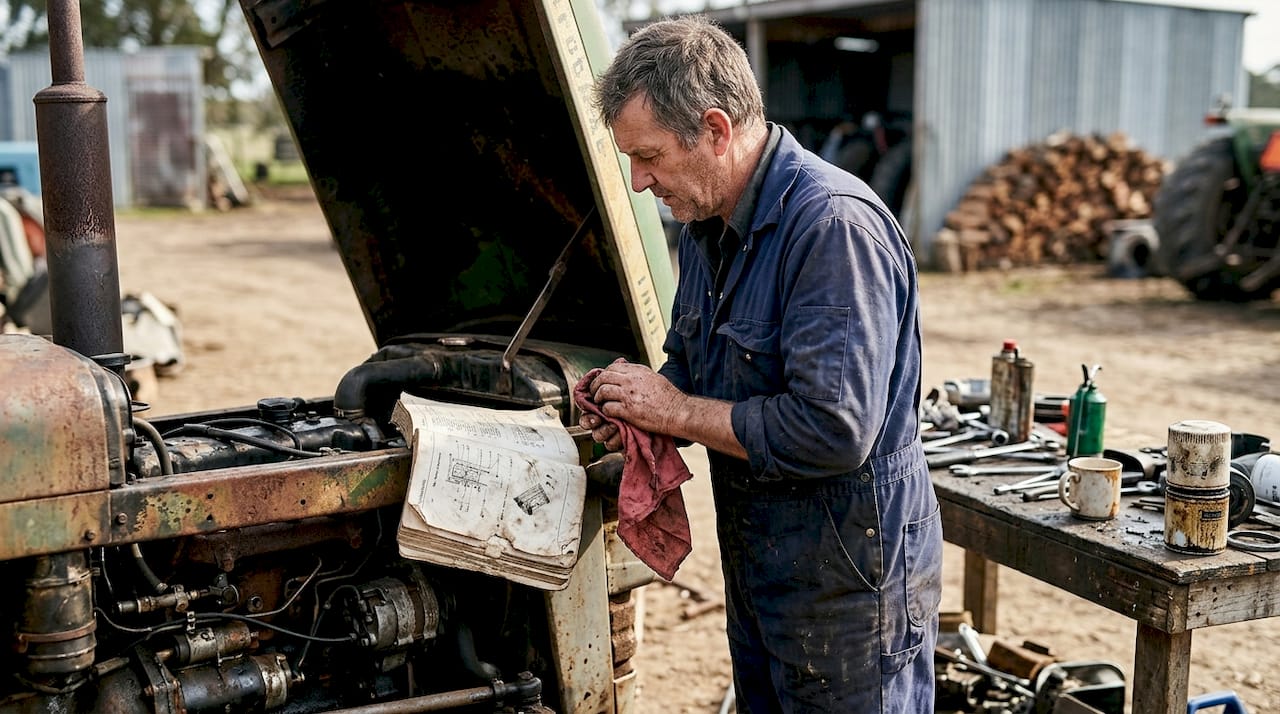
| Feature | OEM parts | Aftermarket parts |
|---|---|---|
| Cost | Higher upfront | Lower upfront |
| Fitment accuracy | Exact match | Varies by supplier |
| Lifespan | Longer on critical parts | Shorter on low-quality items |
| Availability | Dealer dependent | Locally stocked |
| Best use | Electronics, hydraulics | Filters, belts, wear items |
OEM is preferred for critical components, while aftermarket parts are well-suited for non-critical systems and older machines where OEM support is limited or discontinued. This distinction matters enormously in Greece, where dust, frost, and variable fuel quality put extra stress on components.
Key scenarios where each option makes sense:
- Use OEM for: Hydraulic pumps, electronic control units, injection systems, and any component where a failure cascades into larger damage.
- Use aftermarket for: Air filters, oil filters, belts, tires, brake pads, and other wear items that need frequent replacement.
- Avoid generic aftermarket for: Seals and gaskets on high-pressure systems, where poor fitment causes leaks and expensive secondary damage.
Pro Tip: Keep a split inventory. Stock OEM parts for your tractor’s hydraulic and electronic systems, and use quality aftermarket parts for consumables. This approach, detailed further in our OEM tractor parts guide, balances cost control with reliability where it counts most.
“Saving 20€ on a generic hydraulic seal that fails in three months is not a saving. It is a delayed expense with added labor costs.”
For a deeper look at how part origin affects long-term repair outcomes, the benefits of genuine parts resource breaks down real-world failure comparisons that are directly relevant to Greek field conditions.
Best practices in preventive maintenance with aftermarket support
Preventive maintenance is not complicated, but it does require consistency. The good news is that a reliable aftermarket supplier makes it far easier to stick to a schedule because the parts you need are actually available when you need them.
Scheduled preventive maintenance reduces breakdowns by 20%, biannual hydraulic fluid changes boost efficiency by 25%, and proper winterization cuts freeze damage by 85%. Those numbers reflect real operational savings, not theoretical projections.
Here is a practical maintenance sequence built around aftermarket supply access:
- Pre-season inspection: Check belts, filters, hoses, and fluid levels before the busy period starts. Order replacements in advance so you are not scrambling during harvest.
- 50-hour service: Replace engine oil and oil filter. Inspect air filter and clean or replace based on dust exposure.
- 250-hour service: Replace fuel filter, check hydraulic fluid, inspect brake system, and lubricate all grease points.
- 500-hour service: Full hydraulic fluid change, coolant check, belt tension adjustment, and battery inspection.
- End-of-season winterization: Drain and flush cooling system, apply antifreeze, stabilize fuel, and store with a full tank to prevent condensation.
Tailored maintenance for dust and frost conditions improves your ability to predict failures before they happen. Greek farming environments are particularly demanding. Northern regions face hard frosts, while central and southern areas deal with heavy dust loads during summer harvests. Both conditions accelerate wear on filters, seals, and cooling components.
Additional maintenance tasks specific to Greek conditions:
- Clean air filters twice as often during dry, dusty harvests.
- Inspect coolant hoses before winter in frost-prone areas.
- Check fuel system components more frequently if using lower-grade diesel.
- Lubricate PTO shafts and linkage points after every wet or muddy operation.
Pro Tip: Keep a simple paper log or phone note for every part you replace, including the date and machine hours. After two seasons, you will see clear patterns that let you order parts before failures happen, not after. This is one of the most underused tools in farm maintenance, and it costs nothing to start.
For a full breakdown of service intervals and task checklists, the seasonal tractor care guide and the maintenance tips guide are both practical starting points.
How to choose the right aftermarket supplier in Greece
Not all aftermarket suppliers are equal. The market is growing fast, and that means more options but also more risk of landing with a supplier who ships the wrong part, takes two weeks to respond, or offers no return policy when fitment fails.
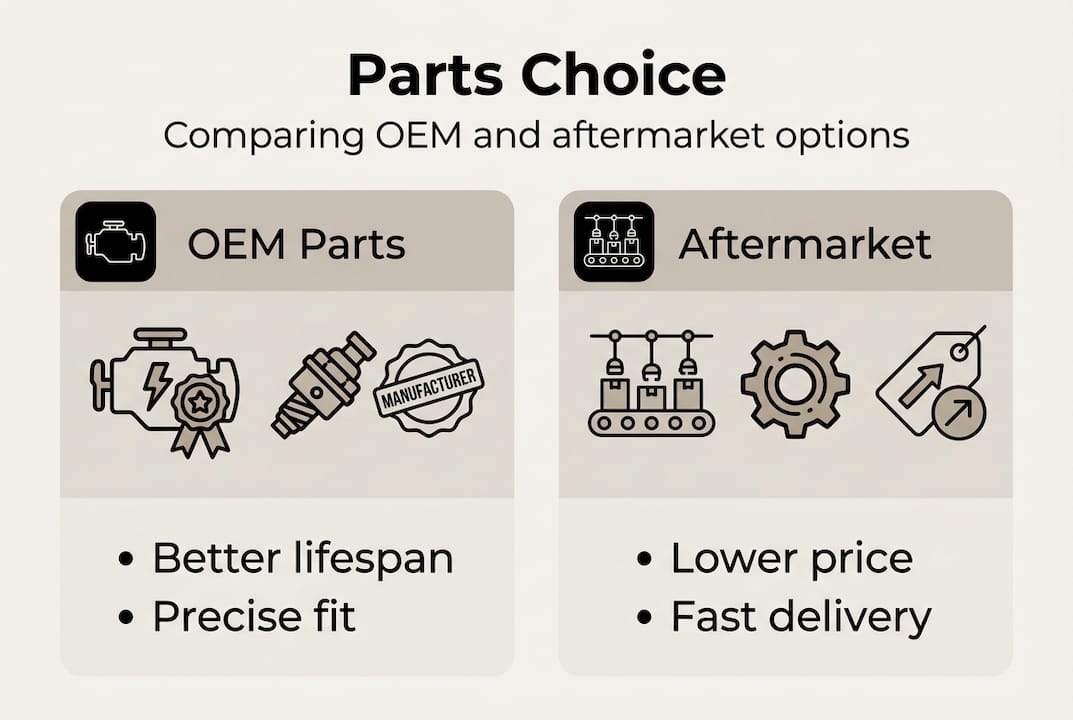
Prioritizing suppliers with accurate fitment data is the single most effective way to avoid returns, delays, and misfit parts. Fitment data tells you exactly which tractor models and years a part is compatible with, and suppliers who invest in maintaining that data are signaling a higher level of professionalism.
Local Greek suppliers like Pexlivanidis offer quick response and immediate access to a wide range of parts, which is a critical advantage when you are in the middle of a harvest and cannot afford to wait.
Before committing to a supplier, ask these questions:
- Do you have fitment data for my specific tractor model and year?
- What is your average delivery time to my area?
- What is your return policy if a part does not fit?
- Do you stock parts for older or discontinued models?
- Can I reach a knowledgeable person by phone during business hours?
| Supplier type | Fitment accuracy | Delivery speed | Support quality | Cost level |
|---|---|---|---|---|
| Local specialist (e.g., Pexlivanidis) | High | 24 hours | Direct and responsive | Competitive |
| Online marketplace | Variable | 3-7 days | Limited | Low to mid |
| Brand dealer | Exact (OEM only) | 2-5 days | Structured | High |
For a full breakdown of what genuine parts bring to long-term maintenance outcomes, the OEM parts benefits guide is worth reviewing before making large purchasing decisions.
Avoiding common pitfalls comes down to one habit: always confirm part numbers before ordering, and always choose suppliers who stand behind their fitment claims with a real return process.
The hidden value: What most experts miss about aftermarket support
Most discussions about aftermarket support focus on price comparisons and part quality ratings. Those matter, but they miss the deeper factor that actually determines outcomes for Greek farmers: the relationship with your supplier.
A supplier who knows your farm, your machines, and your seasonal schedule can flag a part shortage before it becomes your emergency. That kind of proactive support is worth more than a 10% discount on a filter. OEM reduces repeat failures to zero, but aftermarket suppliers like Pexlivanidis enable immediate solutions during peak seasons when dealer lead times simply do not work.
Greece’s specific conditions make this even more critical. Dust-heavy summers and cold northern winters demand a supplier who understands local wear patterns, not just a catalog. The OEM impact perspective reinforces this: part origin matters less than fitment quality and availability timing. Generic parts that arrive in 24 hours often outperform premium parts stuck in a dealer backorder queue.
Build your supplier network the same way you build any working relationship. Start with one trusted local source, test their responsiveness, and expand from there. The farmers who minimize downtime are not always the ones with the newest tractors. They are the ones with the best supply relationships.
Reliable solutions for Greek farmers: Where to find trusted support
If you are ready to move beyond reactive repairs and build a maintenance strategy that actually holds up through peak season, the right resources are already available. Pexlivanidis stocks over 20,000 parts with free shipping across Greece on orders over 100€, and the catalog covers both OEM and quality aftermarket options for a wide range of tractor brands. Start by reviewing the guide to essential machinery parts to identify the components most critical to your operation. Then use the maintenance tips guide to build a service schedule around your specific conditions. For accessory decisions, the resource on choosing tractor accessories walks you through fitment and performance considerations that matter in Greek field environments.
Frequently asked questions
How does aftermarket support reduce tractor downtime for Greek farmers?
Reliable aftermarket suppliers offer same-day or next-day access to quality parts, cutting downtime by up to 40% especially during peak farming seasons when every hour counts.
When should I choose OEM parts over aftermarket parts?
Use OEM parts for critical components like hydraulics and electronics where OEM parts improve reliability significantly; aftermarket is well-suited for wear items and older tractors with discontinued OEM support.
What are the top factors for selecting an aftermarket supplier in Greece?
Focus on fitment accuracy, local stock availability, and service responsiveness. Fitment data and quick availability are the two factors that most directly prevent returns and delays in Greek agricultural operations.
How does preventive maintenance with aftermarket parts impact farm costs?
A consistent maintenance schedule using quality aftermarket parts cuts repair costs 40-60% by catching wear before it becomes failure, reducing both parts costs and lost productivity over the season.