

TL;DR:
- Timely replacement of tractor parts reduces downtime and repair costs significantly.
- Regular preventive maintenance improves safety, performance, and extends tractor lifespan.
- Using OEM parts for critical components ensures better fit, durability, and warranty protection.
Waiting until something breaks is the most expensive maintenance strategy on any farm. Timely part replacement reduces equipment downtime by up to 40% and slashes repair costs by 40 to 60%, yet most Greek farmers still treat replacement as a last resort. In the middle of olive harvest or wheat planting, a failed hydraulic pump or worn clutch disc does not just slow you down. It can cost you an entire season. This guide gives you the evidence, the comparisons, and the practical steps to make proactive part replacement a habit rather than a crisis response.
Table of Contents
- The real cost of delayed part replacement
- How timely part replacement protects performance and safety
- OEM vs. aftermarket parts: Quality, warranty, and risk in Greece
- Seasonal part replacement strategies for Greek farms
- Building a proactive replacement schedule
- A seasoned Greek mechanic’s take: Timeliness beats luck every time
- Your next steps: Reliable parts and expert support for Greek farms
- Frequently asked questions
Key Takeaways
| Point | Details |
|---|---|
| Downtime prevention | Timely part replacement can cut tractor downtime and repair costs by up to 40%. |
| Safety and reliability | Sticking to a replacement schedule reduces accidents and extends machinery lifespan. |
| Quality matters | OEM parts offer better protection and reliability than cheaper generics, especially in Greece. |
| Seasonal planning | Tailoring part replacement to Greek seasonal challenges further boosts performance and minimizes costly delays. |
The real cost of delayed part replacement
It is easy to rationalize putting off a part replacement when the tractor is still running. But running rough and running right are very different things, and the gap between them has a price tag attached.
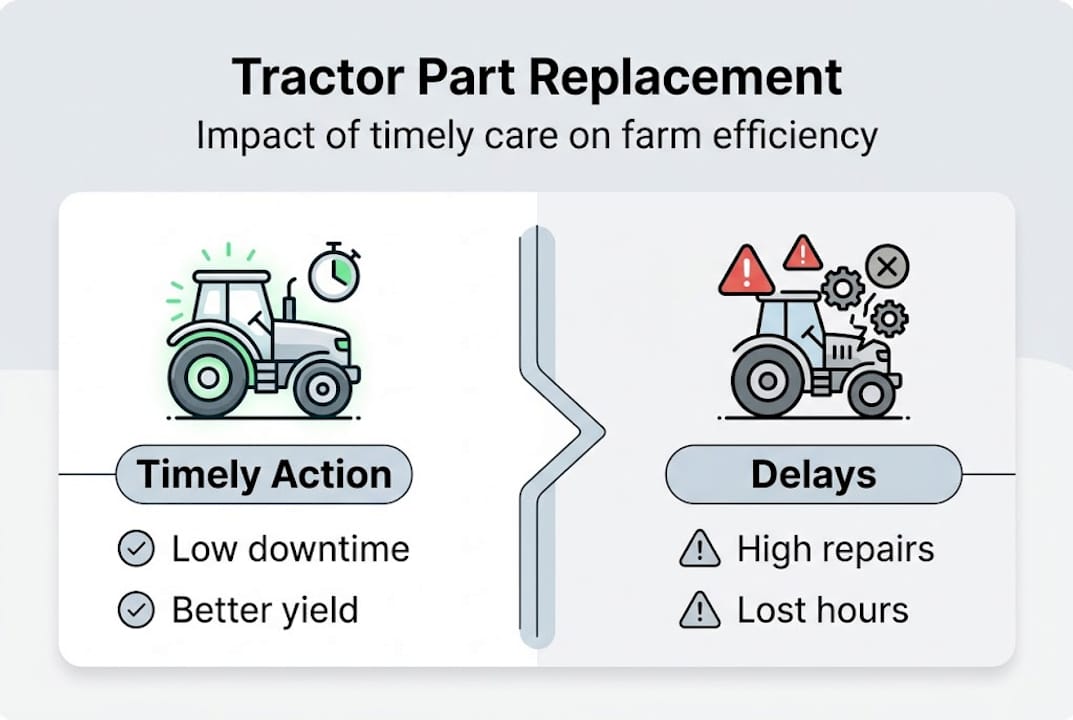
The most visible direct costs are repair bills and lost field time. Neglecting worn parts causes 15 to 35% productivity losses, with repair costs climbing 3 to 5 times higher than if the part had been swapped out early. A filter that costs 15 euros today can trigger an engine rebuild that costs 1,500 euros next month. That math is not complicated, but it is easy to ignore when you are busy.
The hidden costs cut even deeper. A tractor that fails during peak planting or harvest does not just need a repair. It needs a repair right now, which often means emergency shipping, premium labor rates, and delays that no amount of money can fully recover. Missed seasonal windows in Greece, where planting cycles are tight and weather windows narrow, translate directly into lost yields and missed income.
Here is a comparison of what timely versus delayed replacement typically looks like:
| Factor | Timely replacement | Delayed replacement |
|---|---|---|
| Average repair cost | Low (preventive) | 3 to 5x higher |
| Downtime per incident | 1 to 2 days | 5 to 14 days |
| Productivity impact | Minimal | 15 to 35% loss |
| Risk of full breakdown | Very low | High |
| Seasonal work disruption | Rare | Common |
The numbers tell a clear story. Following a solid tractor maintenance checklist is not extra work. It is actually less work overall, because you avoid the scramble of emergency repairs.
Here are the key cost categories to keep in mind:
- Direct repair costs: Parts, labor, and potential equipment rental during downtime
- Yield losses: Crops left unharvested or planted late due to machine failure
- Emergency logistics: Rush shipping of parts, especially for rare components not stocked locally
- Compounding damage: One failed part stressing adjacent components, triggering cascading failures
Investing in seasonal tractor care is the single most reliable way to keep those costs under control.
How timely part replacement protects performance and safety
While the costs are clear, timely replacement also brings critical benefits for performance and safety. This is not just about keeping your tractor running. It is about keeping your farm and your workers safe.
Here is how scheduled replacement prevents breakdowns in practice:
- Worn parts stress neighboring components. A stretched drive chain, for example, wears sprockets faster. Replacing the chain on schedule protects both parts.
- Fluid system parts age silently. Hydraulic seals and hoses rarely give obvious warning before they fail. Scheduled replacement removes the guessing.
- Filters protect engines. A clogged air filter forces the engine to work harder, accelerating wear on pistons and cylinders.
- Tires and belts degrade with heat and UV exposure. In the Greek summer, degradation accelerates. Visual checks alone are not reliable.
- Electrical components corrode in humid coastal areas. Regular inspection and replacement of sensors and wiring prevents unexpected shutdowns.
Preventive maintenance extends tractor lifespan by nearly 30%, with breakdowns reduced by 20%. That kind of reliability is not accidental. It comes from consistent, scheduled attention.
35% of farm accidents are linked to neglected mechanical failures. Brake fade, steering failure, and PTO (power take-off) malfunctions are among the most dangerous consequences of deferred maintenance.
Insurance implications are also real. In Greece, machinery insurance policies often include clauses that reduce or deny claims if evidence of neglect is found. A tractor that fails because of a clearly worn part may leave you without coverage at the worst possible moment.
For long-term reliability, tractor lifespan extension starts with replacing parts before they fail, not after.
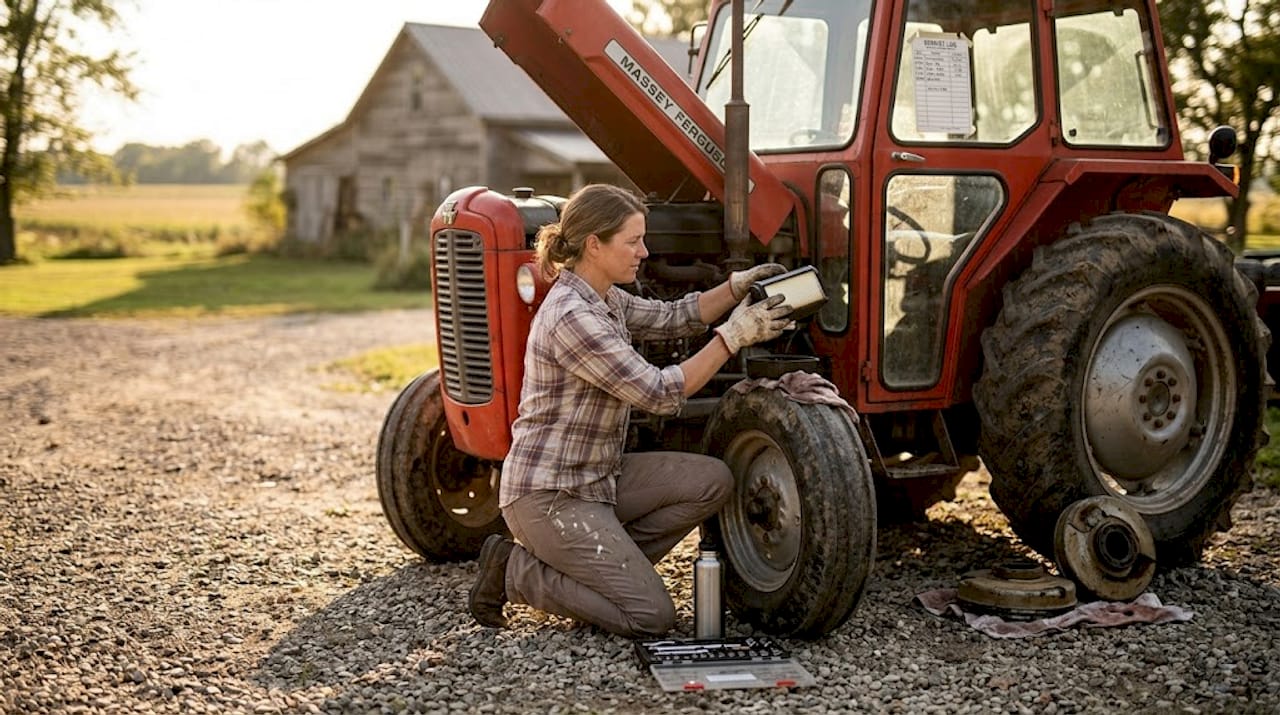
Pro Tip: Before every major planting or harvest window, run a focused inspection on your top five wear items: air filter, hydraulic fluid, belt tension, brake pads, and tire pressure. Thirty minutes of checking can save thirty days of downtime.
OEM vs. aftermarket parts: Quality, warranty, and risk in Greece
Not all replacement parts are created equal. Choosing the right type matters just as much as timing. Greek farmers face a real choice between original equipment manufacturer (OEM) parts, which are made by the tractor’s original manufacturer, and aftermarket alternatives made by third-party suppliers.
| Factor | OEM parts | Aftermarket parts |
|---|---|---|
| Fit and compatibility | Exact match | Variable, risk of mismatch |
| Durability | Manufacturer-tested | Inconsistent quality |
| Price | Higher upfront | Lower upfront |
| Warranty impact | Warranty preserved | May void warranty |
| Availability in Greece | Sometimes limited | Often more available locally |
OEM parts reduce premature failures by 25% compared to generic aftermarket alternatives, ensuring better compatibility and durability over time. That 25% gap adds up fast across a working season.
Aftermarket parts have a legitimate role. For older tractors where OEM parts are discontinued, or for low-stress components like body panels and cab accessories, quality aftermarket options can be practical and cost-effective. The key is knowing where that line sits.
Pros of OEM parts for Greek farms:
- Guaranteed fit, especially for hydraulic and engine components
- Preserves manufacturer warranty on newer machines
- Predictable service life makes scheduling easier
- Better resale value for the tractor overall
Cons of OEM parts:
- Higher purchase cost
- Sometimes slower to source in rural areas of Greece
Pros of aftermarket parts:
- Lower cost for non-critical components
- Often available faster through local suppliers
Cons of aftermarket parts:
- Quality varies widely between manufacturers
- Poor fit on hydraulics or engine can cause cascading failures
- Risk of voiding warranty on key systems
For a deeper look at this decision, the guide on OEM vs aftermarket parts breaks down the tradeoffs by component type.
Pro Tip: Never compromise on OEM for hydraulic pumps, engine gaskets, and fuel injection components. These systems operate under high pressure and heat, and a poor fit creates failures that cost far more than the money saved on the part.
Seasonal part replacement strategies for Greek farms
Replacing the right part at the right time also depends heavily on Greece’s farming seasons and conditions. Greece is not a single climate. From the dry plains of Thessaly to the humid coastal regions near Thessaloniki, your replacement schedule needs to reflect where you farm.
Seasonal maintenance tailored to dust and frost conditions cuts downtime by 40%. That kind of result comes from matching your maintenance calendar to actual operating conditions, not just the manufacturer’s generic schedule.
Here is a practical season-by-season breakdown:
- Spring (pre-planting): Replace air filters, check hydraulic hoses, inspect tires for winter damage, flush old hydraulic fluid.
- Summer (harvest): Prioritize cooling system parts, radiator hoses, belts, and fan assemblies. Heat stress is the biggest threat.
- Autumn (post-harvest): Replace oil and fuel filters, check the battery and electrical connections, inspect the PTO shaft and couplings.
- Winter (storage and prep): Flush the coolant system, check antifreeze concentration, replace any cracked belts, and protect exposed metal components.
What to prioritize by season:
- Spring: Air filters, hydraulic fluid, tire condition
- Summer: Coolant hoses, belts, radiator cap, fuel filters
- Autumn: Engine oil, fuel system, PTO components
- Winter: Coolant, battery, electrical system, stored fuel quality
In dusty agricultural areas, filter and oil replacement may need to happen 50% more frequently than standard schedules recommend. For farms near dirt roads or fields with heavy residue, that means air filter checks every 50 hours instead of every 100.
| Season | Key parts to replace | Greece-specific concern |
|---|---|---|
| Spring | Air filters, hydraulic fluid | Dust from dry fields |
| Summer | Cooling hoses, belts | Extreme heat stress |
| Autumn | Oil, fuel filters, PTO parts | Heavy use fatigue |
| Winter | Coolant, battery, electrics | Frost and storage damage |
For a complete regional plan, the seasonal maintenance guide is a practical starting point. Sourcing from local suppliers in Thessaloniki and surrounding areas also reduces the supply lag that hits rural farms hardest during peak season.
Building a proactive replacement schedule
Making replacements timely means having a plan. A good replacement schedule does not need to be complicated. It just needs to be consistent.
60% of tractor failures are preventable with regular maintenance. That statistic should make you want to build a system, not just hope for the best.
Here is how to set one up:
- List every wear item on your tractor. Use the owner’s manual as a starting point. Group parts by replacement interval: every 50 hours, every 250 hours, annually, or seasonally.
- Record your current hours and last replacement dates. A simple notebook works. So does a spreadsheet. The tool does not matter. The habit does.
- Set alerts. Use your phone calendar or a farm management app to flag upcoming replacements two weeks in advance. That gives you time to order parts before you need them.
- Keep a small inventory of fast-wearing parts. Store spare air filters, oil filters, fan belts, and fuses on the farm. These are cheap, fail often, and cause major delays if you do not have them on hand.
- Review after every season. What failed unexpectedly? What held up better than expected? Adjust your schedule based on real data from your own farm.
Practical tips to keep the schedule working:
- Order parts from a maintenance scheduling guide that accounts for regional supply delays in Greece
- Keep a dedicated parts bin in your workshop, organized by tractor model
- Share the schedule with any workers who operate the equipment
- Use the replacement checklist as a seasonal sign-off document
- Factor in supply chain timing: rural areas may need 5 to 10 days lead time for specialty parts
The goal is to make timely replacement automatic, not reactive.
A seasoned Greek mechanic’s take: Timeliness beats luck every time
Technical guides are useful. But the clearest lessons come from mechanics who have pulled apart tractors at 11 PM during harvest because someone waited too long.
The most common excuse in the field is “I’ll fix it after harvest.” That phrase has cost more Greek farmers more money than any single part failure. Because when a worn clutch disc finally goes during the last week of wheat cutting, you are not just fixing a clutch. You are losing days of work, scrambling for a replacement, and hoping the weather holds.
What decades of real-world maintenance experience actually teaches is this: the farmers who rarely face emergencies are not the luckiest ones. They are the most disciplined ones. They check the same parts at the same intervals, season after season, without waiting for symptoms.
Timeliness is not a personality trait. It is a system. And any farmer can build one.
Your next steps: Reliable parts and expert support for Greek farms
Ready to take the next step? Putting this guide into practice starts with having access to the right parts, at the right time, from a supplier who understands Greek farming conditions.
For a broader look at what your tractor actually needs, the overview of agricultural machinery parts covers the full range of components and what each one does. If you want to sharpen your overall maintenance habits, the maintenance tips guide is a practical companion to this article. And when you are ready to order, pexlivanidis.com carries over 20,000 parts with free shipping across Greece for orders over 100 euros, backed by wholesale B2B options for larger operations.
Frequently asked questions
What are the top signs that a tractor part needs timely replacement?
Worn part signs include unusual noises, fluid leaks, increased vibration, and sudden performance drops. Any one of these symptoms warrants immediate inspection before the problem escalates.
How often should tractor filters and oil be replaced in Greece?
In dusty or high-load regions, filter and oil changes should happen up to 50% more frequently than the manufacturer’s standard schedule. Check conditions on your specific farm rather than relying solely on the manual.
Does using non-OEM parts affect my tractor warranty?
Yes. Non-OEM parts can void your warranty, particularly for engine and hydraulic systems where fit and pressure tolerances are critical. Always verify warranty terms before substituting aftermarket components on newer machines.
How much downtime or money can I save with timely part replacement?
Timely replacement can cut downtime by up to 40% and reduce repair costs by 40 to 60%. The savings scale with the size and intensity of your operation.
Should I follow a seasonal or usage-based replacement plan?
The best approach combines both. Seasonal maintenance aligned with Greek farming cycles, plus hour-based tracking for high-wear components, gives you the most complete protection against unexpected failures.